
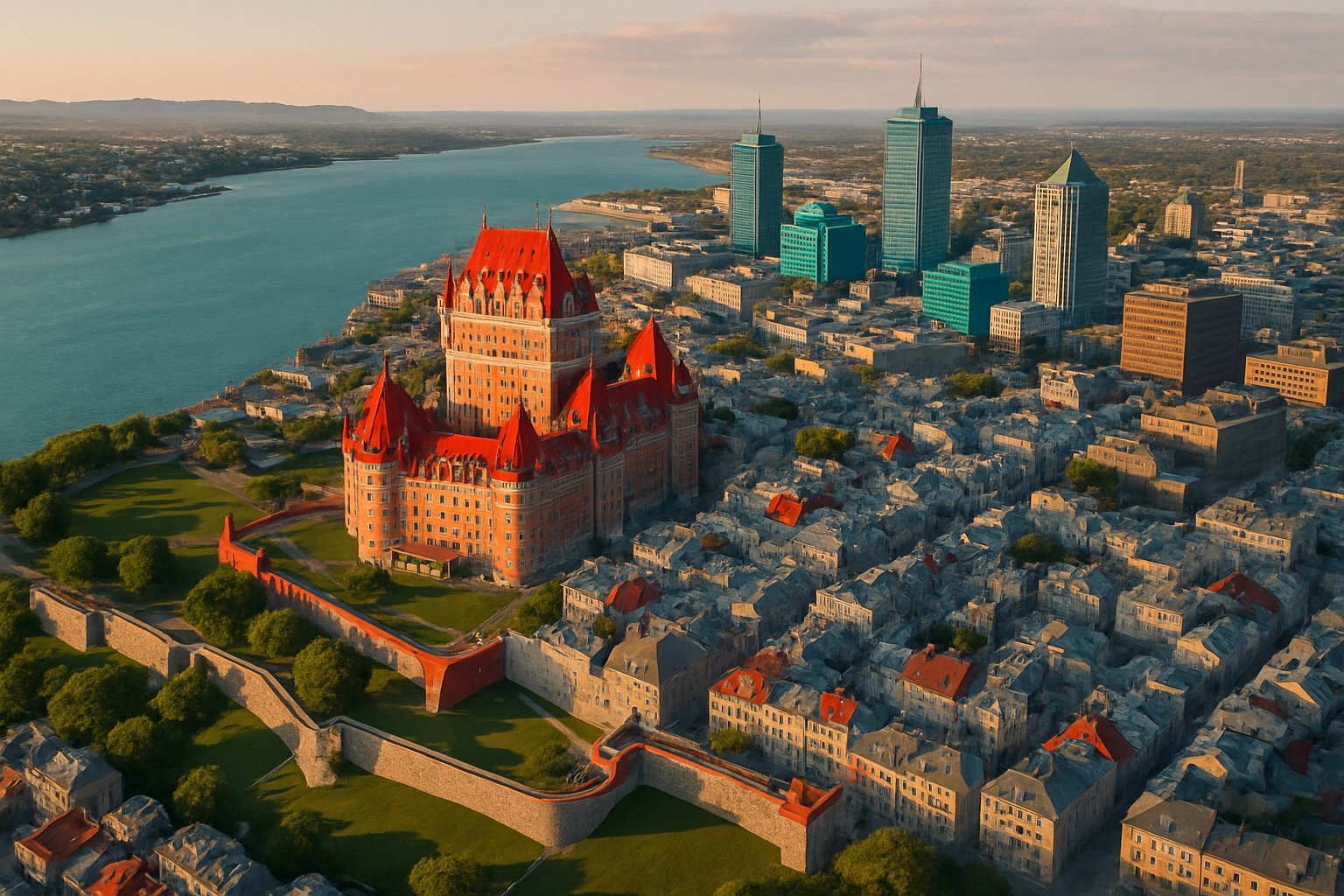
Quebec City operates as Quebec's capital with a startup ecosystem shaped by provincial government presence, francophone market positioning, and sector strengths in government technology, video games, and insurance technology. It's affordable, culturally distinct, and offers advantages for founders building in French-language markets or serving government clients.
This article is for founders evaluating Quebec City as a potential base, investors assessing francophone market opportunities, and anyone trying to understand how government concentration and language positioning create regional ecosystem advantages. We'll cover the infrastructure, the francophone advantages, the market limitations, and who benefits most from building here.
What Makes Quebec City Different
Quebec City's ecosystem reflects its position as provincial capital with strong francophone identity and sector concentrations in government and creative industries.
Provincial government dominates employment. As Quebec's capital, Quebec City houses provincial government ministries, Crown corporations, and public sector employment exceeding 50,000 people. According to Quebec City Economic Development data, government and public administration represent the largest employment sector, creating procurement opportunities and enterprise software needs.
French-language market positioning is strategic. Quebec City operates primarily in French (over 95% francophone), creating natural advantages for companies targeting Quebec's 8.5 million people, francophone Canada, France, or broader francophone markets. This language positioning differentiates it from bilingual Montreal or English-dominant hubs.
Video game industry is established. Ubisoft Quebec, Beenox (Activision), and other studios employ over 2,000 game developers. According to Alliance numérique data, Quebec City's game development sector creates expertise in graphics, engines, and interactive technology that benefits broader tech ecosystem.
Insurance and financial services concentrate here. Desjardins Group, Industrial Alliance, SSQ Insurance, and other financial institutions maintain major operations. This creates enterprise software opportunities and fintech expertise specific to Quebec City.
Cost of operation is substantially lower than Montreal. Office space and housing run 30-40% below Montreal while being 50-60% below Toronto. According to Royal LePage's 2025 market data, Quebec City's average home price is approximately $380,000, making it one of Quebec's most affordable major cities.
Real Advantages for Startups
Government technology opportunities are direct. If you're building software for provincial government, municipal services, or public sector use, Quebec City provides proximity to decision-makers and procurement processes. Understanding government needs and navigating French-language RFPs happens more efficiently locally.
French-language market access is genuine. If you're targeting Quebec's 8.5 million people or building products requiring French-first development, Quebec City's francophone environment ensures proper French quality and cultural fit. This is particularly valuable for consumer products, education technology, or government software where language quality matters critically.
Gaming and creative technology expertise exists. If you're building game engines, creative tools, graphics technology, or entertainment software, Quebec City's gaming industry creates talent pools and domain expertise. Engineers who've shipped AAA titles bring production knowledge.
Insurance technology opportunities are accessible. With Desjardins, Industrial Alliance, and other insurers headquartered locally, insurtech and financial services software companies find enterprise customers and domain expertise without traveling to Toronto or Montreal.
Extreme cost efficiency extends runway. The same seed capital that funds 12 months in Toronto funds 20-24 months in Quebec City. For bootstrapped companies or teams stretching venture funding, this creates exceptional time to validate product-market fit. For insights on capital efficiency, this analysis of financial sustainability explores runway optimization.
Quality of life supports retention. Quebec City offers European-style architecture, cultural amenities, outdoor access to Laurentian mountains, and small-city pace. Employees maintain quality of life on salaries 30-40% below Montreal, improving retention despite lower cash compensation.
Significant Language and Market Challenges
Language creates mandatory complexity. Quebec's language laws (Bill 96) require French-language services, documentation, and customer support for companies above certain sizes. According to Government of Quebec regulations, this creates compliance overhead that anglophone founders must navigate carefully.
Anglophone talent recruitment is challenging. If you need to hire senior engineers or executives who don't speak French, Quebec City's francophone dominance creates recruitment friction. Many experienced tech workers prefer Montreal's bilingual environment.
Market size limits scale. Quebec City metro has roughly 820,000 people. While Quebec province has 8.5 million, companies achieving provincial market fit must still expand to rest of Canada or internationally. Geographic and linguistic isolation from English Canada creates expansion challenges.
Venture capital is limited. Quebec City has some angel investors and access to provincial programs, but institutional venture capital concentrates in Montreal. Series A and beyond typically require Montreal or Toronto investors. According to Canadian Venture Capital and Private Equity Association data, Quebec City attracted approximately $150 million in venture investment in 2024, roughly 5% of Quebec's total.
Brain drain to Montreal is constant. Top graduates often leave for Montreal's larger market, bilingual environment, and higher salaries. Retaining ambitious talent requires competitive equity and genuinely interesting problems.
English Canada distance creates challenges. Quebec City sits 2.5 hours from Montreal but feels culturally distant from Toronto and Western Canada. Companies targeting English Canadian markets operate from linguistic and cultural distance that creates sales friction.
What's Changed in 2026
Remote work normalized distributed teams. Quebec City companies can hire from Montreal, Toronto, or internationally while maintaining Quebec City cost bases. This addresses talent constraints while preserving cost advantages.
Government digital transformation accelerated. COVID-19 forced government digitization. Legacy systems modernization creates sustained opportunities for companies building government-focused technology.
French-language AI and technology investment increased. As AI models expand beyond English, Quebec's French-language expertise creates opportunities. Companies building French-first or bilingual AI products find ecosystem support and government funding.
Gaming industry matured into broader tech ecosystem. Skills from game development now flow into VR/AR, simulation software, and real-time visualization. Companies building in adjacent spaces leverage Quebec City's gaming talent.
Cultural tech opportunities emerged. Quebec's distinct culture and creative industries create opportunities for companies building tools serving francophone creators, artists, and cultural producers.
Who Should Build in Quebec City
Government technology companies. If you're building software for Quebec government, municipal services, or public sector, Quebec City's government concentration and procurement accessibility create advantages despite language requirements.
French-language product companies. If you're building consumer products, education technology, or content platforms specifically for Quebec or francophone markets, Quebec City's French-first environment ensures quality and cultural fit.
Gaming and creative technology startups. If you're building game engines, creative tools, or entertainment technology, Quebec City's gaming industry talent and production expertise provide ecosystem advantages.
Insurance technology companies. If you're building insurtech or financial services software and can serve Desjardins, Industrial Alliance, or other local insurers, enterprise customer access justifies location.
Bootstrapped founders maximizing runway. If you're comfortable operating in French and building with minimal external capital, Quebec City's costs create 2x runway extension versus Toronto. For perspective on efficient growth, this exploration of profitable scaling examines sustainable business models.
Who Should Consider Alternatives
Anglophone founders uncomfortable with French. If you don't speak French and aren't willing to learn, Quebec City's language requirements and francophone dominance create constant friction. Montreal's bilingual environment makes more sense.
Companies targeting English Canadian markets. If your primary market is Toronto, Western Canada, or English-speaking markets, operating from Quebec City creates linguistic and cultural distance that complicates sales and marketing.
Venture-backed startups requiring capital access. If you need to raise Series B, C, and beyond from institutional investors, Montreal's venture concentration provides better access despite Quebec City's lower costs.
Consumer product companies requiring cultural diversity. If you need exposure to multicultural trends and diverse user bases, Montreal or Toronto provide better market context than Quebec City's cultural homogeneity.
Fast-scaling companies. If you need to hire 30-50 people quickly, Quebec City's talent pool—particularly for senior or specialized roles—constrains growth velocity compared to Montreal.
The Quebec City Calculation
Deciding whether to build in Quebec City requires honest assessment of whether French-language positioning and government access justify language complexity and market limitations.
Quebec City provides government customer access, French-language market positioning, gaming industry expertise, insurance sector opportunities, and exceptional cost efficiency. For companies serving Quebec government, targeting francophone markets, or building in gaming/creative tech, these create real advantages.
Quebec City also requires navigating mandatory French-language requirements, smaller talent pools, limited venture capital, and cultural distance from English Canada. You're operating in Quebec's second city, occasionally accessing Montreal resources but fundamentally building in distinct linguistic and cultural environment.
For companies in the right domains—particularly government technology, French-language products, gaming, or insurtech—Quebec City offers undervalued combinations of customer access and cost structure. Understanding how to build effective teams in francophone environments becomes essential.
The question isn't whether Quebec City can support successful tech companies—companies like D-BOX, Creaform, and others prove it can. The question is whether your business model benefits more from Quebec City's French-language positioning and sector access than it suffers from language requirements and smaller ecosystem scale.
For French-language products, government technology, and gaming companies comfortable with francophone operations, Quebec City increasingly makes strategic sense. For anglophone consumer products or companies requiring Montreal/Toronto ecosystem density, alternatives provide better infrastructure.