
How to Reset Your B2B SEO Strategy for 2026: Attribution, AI Search, and Programmatic Content
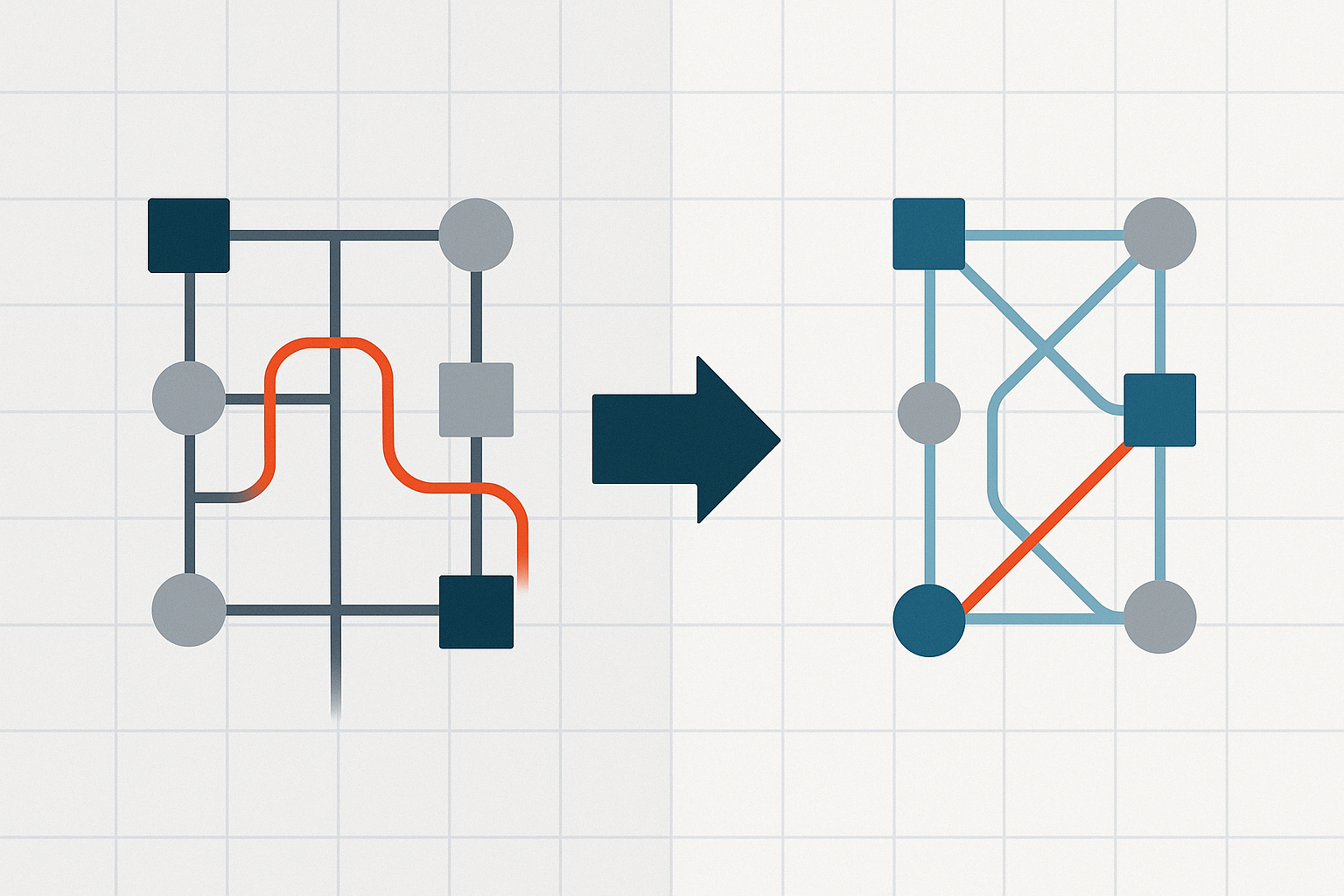
Most companies approach Q1 planning with the wrong question. They ask, "How do we improve SEO?" when they should be asking, "Does our current SEO infrastructure still work?"
The answer, for most B2B marketing teams, is no.
Search behavior fundamentally changed in 2024 and 2025. AI-powered search engines now mediate discovery. Attribution models designed for simpler buyer journeys fail to capture organic influence across 8-touch, 180-day enterprise sales cycles. Content strategies optimized for 2020 ranking factors produce traffic that doesn't convert.
What is an SEO reset? An SEO reset means rebuilding your organic strategy from first principles rather than iterating on outdated foundations. It involves auditing attribution models, restructuring technical infrastructure for AI crawlers, realigning content to pipeline stages, and replacing vanity metrics with revenue outcomes.
Refreshing your approach means updating tactics within the same broken system. Resetting means questioning whether the system itself still serves your business objectives.
This is not about tweaking meta descriptions or adding keywords. A reset addresses structural problems: attribution blind spots, technical debt that blocks AI discoverability, content libraries optimized for traffic instead of pipeline, and reporting dashboards that track rankings instead of revenue contribution.
If your organic program plateaued in 2024, incremental optimization won't fix it. You need systematic reconstruction.
Step 1: Audit SEO Attribution, Not Just Traffic
Traffic reports lie. They tell you how many visitors arrived, not whether those visitors influenced revenue. Start your reset by diagnosing attribution gaps in your current SEO measurement:
- Single-Touch Attribution Problems: First-touch models credit organic search when a prospect enters your funnel, ignoring subsequent touchpoints that actually closed the deal. Last-touch models give all credit to the final conversion event, erasing organic's role in earlier education and consideration. Neither reflects reality in complex B2B sales cycles.
- Multi-Touch Attribution for Long Sales Cycles: Enterprise B2B deals involve 6-10 decision-makers across 120-180 days. Organic content rarely closes deals directly. It influences awareness, builds credibility during evaluation, and supports champions navigating internal buying committees.
Your attribution model must capture these assists. Implement multi-touch attribution that assigns fractional credit across the buyer journey. Time-decay models work well for B2B because they weight recent interactions more heavily while preserving visibility into earlier organic touchpoints.
What to Measure Instead of Rankings
| Old SEO Metrics | 2026 Attribution Metrics |
|---|---|
| Keyword rankings | Organic-attributed pipeline |
| Organic sessions | Organic-influenced deal velocity |
| Domain authority | Cost per organic MQL |
| Page 1 positions | Assisted conversions from organic |
Your reset requires connecting Google Analytics and Search Console to your CRM. Tag organic traffic sources at the campaign level. Build dashboards that show which content assets appear in closed-won deal paths.
If you cannot draw a line from a blog post to a customer, your measurement infrastructure needs rebuilding before you touch content strategy.
Step 2: Rebuild Technical SEO Foundation for AI Crawlers
AI search engines evaluate sites differently than traditional crawlers. They prioritize structured data, semantic clarity, and user experience signals. Technical problems that Google tolerated in 2022 now block AI discoverability.
Run a comprehensive technical audit focused on:
- Crawl Efficiency: Identify and fix crawl traps, redirect chains, and orphaned pages. Implement strategic XML sitemaps that prioritize high-value content over low-conversion blog archives. Use robots.txt directives to prevent resource waste on faceted navigation and parameter-heavy URLs.
- Core Web Vitals Optimization: Measure and optimize Largest Contentful Paint (LCP), First Input Delay (FID), and Cumulative Layout Shift (CLS) across desktop and mobile. Compress images aggressively, implement lazy-loading for non-critical assets, and minimize JavaScript execution time.
Organic click-through rates improve when user experience metrics signal quality. Fast sites earn higher rankings and better AI citation rates.
- Structured Data Implementation for AI Engines: Schema markup helps AI engines parse your content accurately. Implement JSON-LD structured data for articles, products, FAQs, and organizational information. This increases eligibility for rich results in traditional search and improves citation likelihood in AI-generated answers.
- Internal Linking Architecture: Map topical clusters with hub-and-spoke internal link structures. Ensure no valuable page sits more than three clicks from your homepage. Use descriptive anchor text that reinforces semantic relationships between content pieces.
If your site accumulated technical debt over years of platform migrations and feature additions, Q1 2026 is when you fix it. Technical problems compound. Every month you delay costs ranking potential and AI discoverability.
Step 3: Reframe Content for AI Search and Human Discovery
Search behavior in 2026 splits between traditional Google queries and AI-assisted research. Your content must serve both use cases.
For Traditional Search Engines: Target transactional and navigational intent with precision. Build content that earns featured snippets and position-zero placements. Optimize for question-based queries that trigger quick answers.
For AI Search Platforms: Structure content so AI can extract and cite your insights cleanly. Use clear definitions, frameworks, and data points that AI can reference. Create authoritative long-form resources that become source material for AI-generated summaries.
The shift: stop writing for keyword density. Start writing for citability and comprehension. AI engines reward clarity, depth, and structured information architecture.
Audit your existing content library:
- Which posts contain clear, extractable insights?
- Which articles use vague language or lack specificity?
- Which content pieces could consolidate into definitive resources?
Your reset should eliminate thin content and build comprehensive resources. One authoritative 2,000-word guide outperforms five mediocre 400-word posts in both AI citations and traditional rankings.
Step 4: Align Content to Pipeline Stages, Not Traffic
Most content strategies overindex on top-of-funnel awareness material because it generates traffic easily. That explains why most content fails to influence revenue.
Reset your editorial calendar around buyer journey stages:
- Awareness Stage (Problem Recognition): Educational content that defines problems and introduces frameworks. Thought leadership that establishes category positioning. Diagnostic tools and self-assessment resources that help prospects recognize gaps.
- Consideration Stage (Solution Evaluation): Comparison content, methodology explanations, and case studies with attribution data. Product education that builds conviction without premature selling. Technical documentation and integration guides that answer evaluation questions.
- Decision Stage (Vendor Selection): ROI calculators, implementation timelines, and proof points with specific metrics. Customer stories showing attribution and business outcomes. Sales enablement content that addresses final objections from procurement and technical stakeholders.
For enterprise B2B, build content supporting multi-stakeholder buying committees. Create assets that champions can share internally: one-pagers, comparison matrices, technical specifications, and security documentation.
Step 5: Implement Programmatic SEO Where It Creates Value
Programmatic SEO generates pages at scale using templates and structured data. It works for companies with proprietary datasets and clear use cases.
It does not work for everyone. Do not force it.
When Programmatic SEO Makes Sense:
- You possess proprietary data or unique aggregation capabilities
- Location-based services with consistent structural patterns
- Product catalogs with standardized attributes and clear differentiation
- Comparison pages for well-defined categories with stable criteria
When It Does Not:
- You create thin doorway pages without unique value
- Content lacks differentiation per variation
- You manufacture authority you have not earned through actual expertise
If programmatic SEO fits your business model, 2026 is when you build infrastructure properly. Invest in template quality, data accuracy, and user experience. Bad programmatic SEO creates technical debt and algorithmic risk.
Step 6: Build Topical Authority Through Content Clustering
Google and AI engines reward comprehensive topic coverage, not isolated keyword targeting.
Map your content into topical clusters:
- Identify pillar topics central to your business expertise
- Create comprehensive pillar pages (2,000+ words)
- Surround pillars with cluster content addressing subtopics
- Interlink strategically with semantic anchor text
Example cluster structure for demand generation:
- Pillar: Demand Generation Strategy for B2B SaaS
- Clusters: Lead scoring frameworks, multi-touch attribution modeling, pipeline velocity optimization, content syndication ROI measurement, account-based marketing integration
Each cluster post links back to the pillar. The pillar links to all clusters. Search engines recognize authority when coverage is comprehensive and interconnected.
Your reset should consolidate fragmented content into organized clusters. If you published 50 loosely related blog posts, reorganize them into 5-6 pillar-cluster groups with clear topical boundaries.
Step 7: Replace Vanity Metrics with Revenue Outcomes
Vanity metrics destroy strategic thinking. Traffic volume, keyword rankings, and domain authority do not matter if they fail to influence revenue.
Reset your SEO KPIs to business outcomes:
| Metric to Replace | Revenue-Focused Alternative |
|---|---|
| Organic sessions | Organic-attributed pipeline value |
| Keyword rankings | Cost per organic MQL |
| Domain authority | Organic influence on deal velocity |
| Page views | Assisted conversions from organic content |
Your reset should include executive reporting connecting SEO to CFO-level metrics. If you cannot draw a clear line from organic traffic to closed revenue, leadership will not fund your strategy long-term.
For companies with extended sales cycles, track leading indicators: content engagement from target accounts, organic traffic from ICP companies, time spent on high-intent pages by decision-maker titles.
What This Looks Like in Practice
A Series B SaaS company reset their SEO strategy in Q1 2026:
- Technical audit identified 847 crawl errors and 23 redirect chains (fixed within 30 days)
- Attribution analysis showed 40% of organic traffic came from pages generating zero MQLs (consolidated and redirected)
- Content reorganized into 6 pillar-cluster groups covering core product categories
- Programmatic SEO implemented for integration pages using API data
- Reporting shifted from rankings to pipeline contribution and CAC reduction
Results by Q4 2026: 312% increase in organic MQLs, 47% reduction in organic CAC, $4.2M in attributed pipeline from organic content.
That represents a reset, not a refresh.
The Reset Mindset
Resetting SEO and content strategy means accepting that incremental optimization cannot fix fundamentally flawed systems.
Most companies will not do this work. They will update meta descriptions and call it strategic. That explains why most organic programs plateau.
You must decide whether to compete for sustainable advantage or chase temporary gains. Companies that reset foundations in Q1 2026 will outperform competitors still optimizing for 2024 search behavior.
The infrastructure you build this year determines whether you remain relevant in 2028. Choose accordingly.
Frequently Asked Questions
What is the difference between an SEO refresh and an SEO reset?
An SEO refresh optimizes tactics within your existing strategy—updating meta tags, adding keywords, refreshing old content. An SEO reset rebuilds your organic infrastructure from first principles, addressing structural problems like attribution gaps, technical debt, and misaligned content strategy. Refreshes improve incrementally; resets solve systemic issues.
How does AI search change SEO strategy in 2026?
AI search engines prioritize structured data, semantic clarity, and comprehensive topic coverage over traditional ranking factors like backlink volume. Content must be written for citability—clear definitions, extractable insights, and authoritative depth that AI can reference. Technical infrastructure must support AI crawlers through clean schema markup and fast page performance.
What attribution model works best for B2B SEO?
Time-decay multi-touch attribution works well for B2B because it assigns fractional credit across the entire buyer journey while weighting recent touchpoints more heavily. This captures organic content's role in awareness and consideration without ignoring final conversion events. Linear attribution also works if you want equal credit distribution across all touchpoints.
How do you measure SEO's contribution to pipeline instead of traffic?
Connect Google Analytics and Search Console to your CRM. Tag organic traffic sources at campaign level. Build dashboards showing which content appears in closed-won deal paths. Track organic-attributed pipeline value, cost per organic MQL, and assisted conversions. Replace traffic reports with revenue influence reports shared with sales and finance teams.
When does programmatic SEO make sense for B2B companies?
Programmatic SEO makes sense when you have proprietary data, location-based services with consistent structure, product catalogs with standardized attributes, or comparison categories with stable criteria. It does not make sense for companies creating thin content without unique value or trying to manufacture authority they have not earned through actual expertise.
Further Reading
Fishkin, R. (2024). AI overviews and the future of organic search traffic. SparkToro. https://sparktoro.com/blog/ai-overviews-organic-search-traffic/
King, T. (2023). Multi-touch attribution models for long sales cycles. Harvard Business Review. https://hbr.org/2023/09/multi-touch-attribution-models-sales-cycles
Patel, N. (2024). Technical SEO in the age of AI crawlers. Search Engine Journal. https://www.searchenginejournal.com/technical-seo-ai-crawlers/503847/
Sullivan, D. (2024). Core web vitals as ranking signals: 2024 update. Search Engine Land. https://searchengineland.com/core-web-vitals-ranking-signals-2024-442891
Schwartz, B. (2024). Programmatic SEO best practices and algorithmic risks. Search Engine Roundtable. https://www.seroundtable.com/programmatic-seo-best-practices-2024-37219.html
Toth, C. (2024). Topical authority and content clustering strategies. Ahrefs Blog. https://ahrefs.com/blog/topical-authority-content-clusters/