
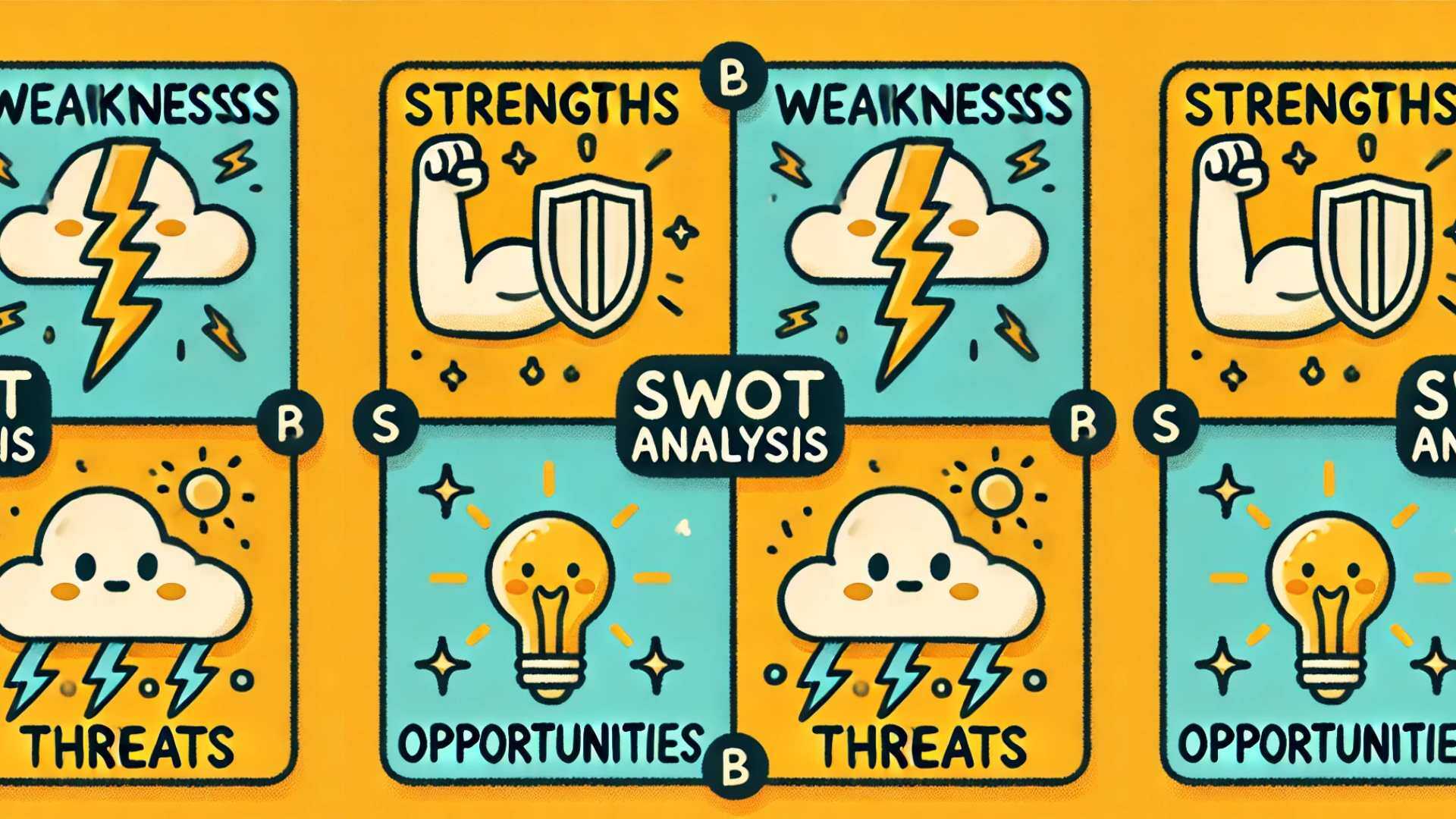
So, as a SaaS startup, you need a SWOT analysis. Maybe it’s for a funding round, or perhaps you’re moving beyond the ideation stage and need a more structured business approach. Either way, you know you've to create one. But what exactly is a SWOT analysis, and why does it matter for your startup?
Let’s break it down in this guide.
|
TLDR: A Guide on SWOT Analysis for Startups |
|
⚡Level of Effort: A 10-minute read with actionable steps requiring about a day to analyze 8 competitors to compile your SWOT. 🎯 Audience: Startup Founders, C-Level Executives, and Marketing Directors looking to sharpen their strategic edge. 📊Skill Level: Intermediate – ideal for those with a solid grasp of business, strategy, and marketing fundamentals. 🧠What You’ll Learn:
🛠 Recommended Tools: Leverage Crunchbase and Statista for market insights, Google Analytics and SEMrush for SEO, and Hotjar for user behavior. Use SurveyMonkey for customer feedback and HubSpot for tracking interactions. |
Who Invented the SWOT Analysis?
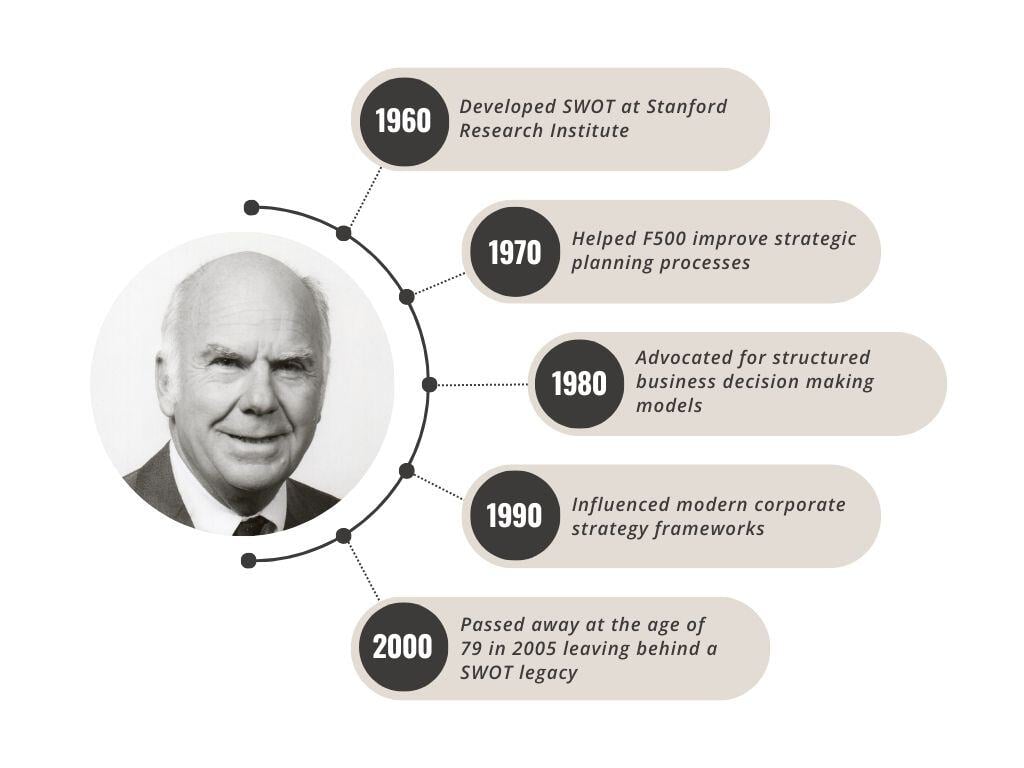
The SWOT analysis is commonly attributed to Albert Humphrey, who led a Stanford University research project in the 1960s focused on why organizations failed at long-term planning. The framework evolved as a practical decision-making tool, not an academic theory.
Today, SWOT is most valuable when applied to fast-moving environments like startups, where structure and prioritization matter more than historical attribution.
What is a SWOT Analysis?
SWOT stands for Strengths, Weaknesses, Opportunities, and Threats. It is a strategic framework used to evaluate a company’s internal capabilities and external environment, helping founders make clearer, more informed decisions.
For startups, SWOT acts as a lightweight decision tool that brings structure to uncertainty, aligns teams around priorities, and highlights where focus will create the greatest impact.
Today, SWOT is widely used across startups, enterprises, and even individual career planning because it remains one of the simplest and most effective ways to assess competitive positioning, guide strategy, and avoid scattered execution.
Why is SWOT important for Startups?
Startups move fast, too fast to waste time on guesswork. A SWOT analysis acts as a quick cheat sheet for your team, helping you focus on what matters most. It adds much needed structure in the startup's world of uncertainty.
Instead of reacting to problems as they come, a SWOT gives your team a clear direction upfront. It keeps priorities sharp, risks visible, and opportunities actionable.
For startups, where speed and clarity mean survival, a SWOT isn’t just useful --- it’s essential.
How to Structure a SWOT Analysis for a SaaS Startup
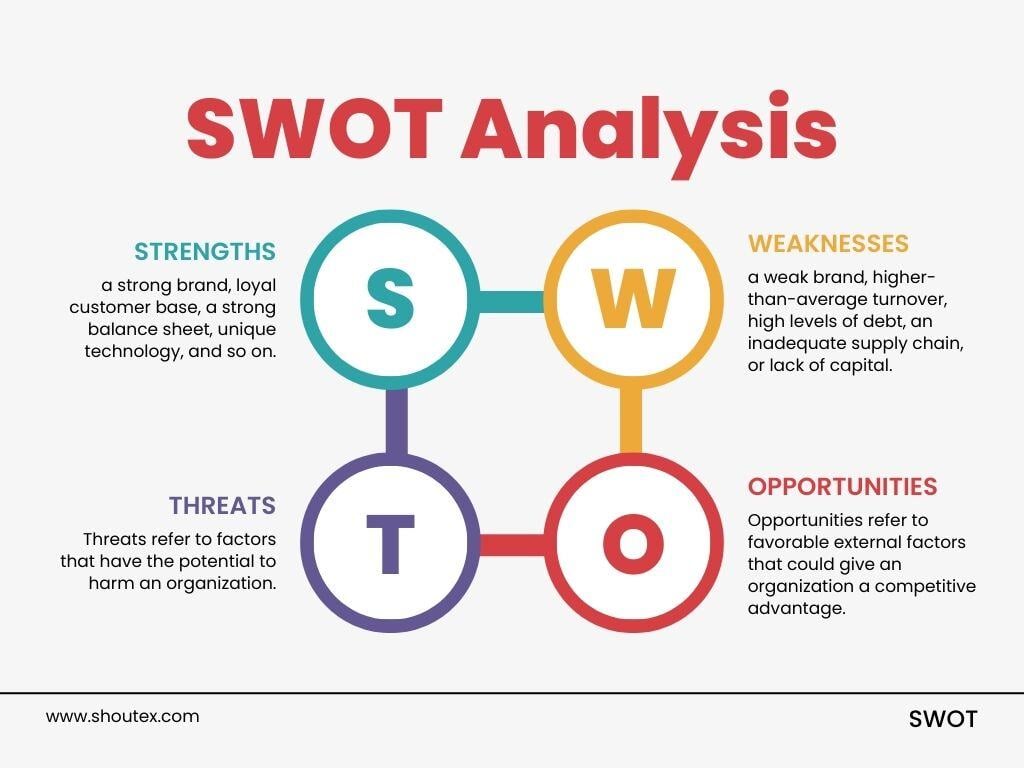
A typical SWOT analysis is divided into four quadrants:
✅ Strengths – What gives your startup an edge? This could be a unique product, a strong team, or early traction.
🚀 Opportunities – Where can you grow? Look at market trends, partnerships, or gaps your competitors haven’t filled.
⚠️ Weaknesses – What’s holding you back? Maybe it’s limited funding, lack of brand awareness, or gaps in your team.
🔴 Threats – What could derail you? This might include strong competitors, changing regulations, or customer churn.
The SWOT Steps
Before diving into your SWOT, take a moment to step back and assess things honestly. A clear, objective look at your startup’s strengths and weaknesses will make the analysis far more useful. The more real you are with your answers, the more actionable your insights will be.
Step 1: Identify Your Strengths
Start by listing your startup's strengths. These are the aspects of your SaaS business that give you an edge in the market. Strengths might include a strong development team, innovative technology, a user-friendly interface, or a growing customer base.
Step 2: Identify Your Weaknesses
Next, consider your weaknesses. These are the internal challenges that could hinder your startup’s growth. Weaknesses could be anything from a lack of brand recognition, limited funding, or gaps in your product features. Being honest about your weaknesses is crucial for improvement.
Step 3: Identify Your Opportunities
Opportunities are external factors that your startup can take advantage of. These might include emerging market trends, new technologies, or shifts in customer behavior. For a SaaS startup, opportunities could also include partnerships with other tech companies or entering a new market segment.
Step 4: Identify Your Threats
Threats are external challenges that could negatively impact your startup. These might include increasing competition, changes in regulations, or economic downturns. For SaaS startups, threats could also come from rapid technological changes or data security issues. Monitoring these threats can help you stay ahead of potential risks.
Step 5: Gather Data
To make your SWOT analysis more reliable, use both internal and external data sources. Internally, gather insights from your team, early customers, and usage metrics. Externally, leverage industry trends, market research, and competitor analysis. Here are some tools and resources to help:
Internal Data Sources:
- Google Analytics – Track user behavior, engagement, and conversion rates.
- SalesForce – For Sales related data about customers.
- HubSpot – Monitor lead generation, customer interactions, and marketing performance.
- Hotjar – Get heatmaps and session recordings to understand user experience.
- Mixpanel – Analyze customer retention and product engagement metrics.
- SurveyMonkey – Collect direct customer feedback through surveys.
External Data Sources:
- Crunchbase – Research industry trends, investments, and competitor activities.
- CB Insights – Access market research and emerging business trends.
- SEMrush – Analyze competitor SEO, PPC, and content strategies.
- SimilarWeb – Benchmark competitor traffic, marketing channels, and engagement.
- Statista – Find industry reports, consumer insights, and global market data.
Step 6: Synthesize the Information
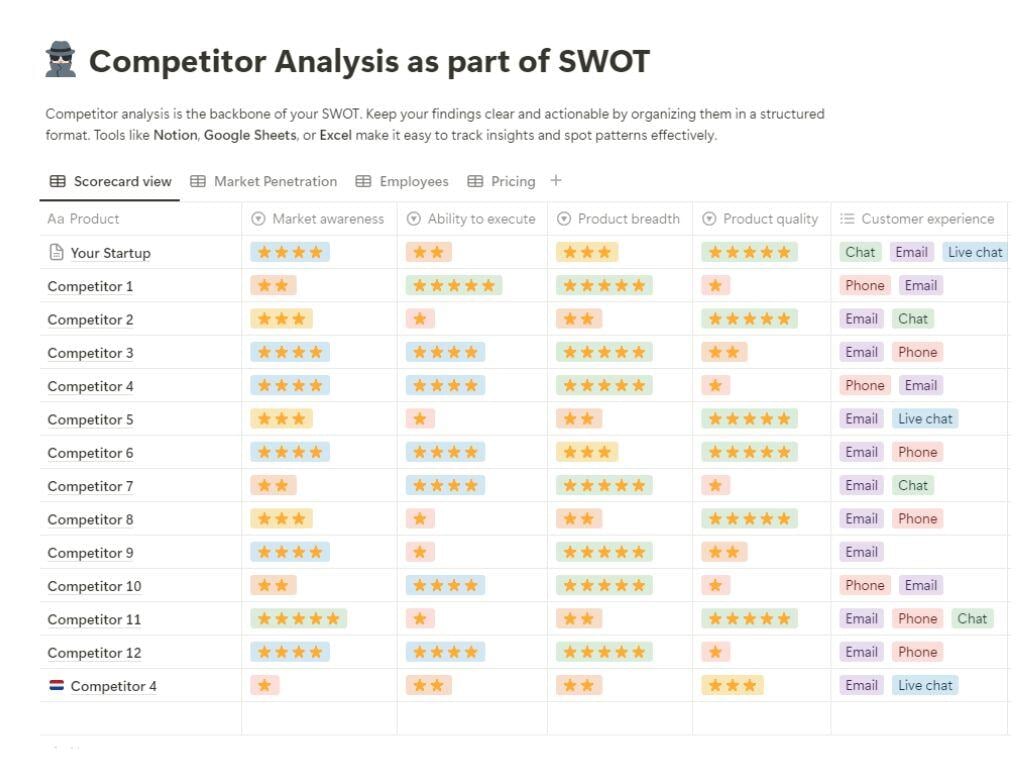
Once you’ve gathered insights, structure them into a SWOT matrix with 10 to 15 key points per quadrant. Group similar ideas and rank them by impact. Tools like Miro, Notion, or Google Sheets can help visualize and refine your analysis.
Final Part - Put your SWOT to use
Your SWOT analysis isn’t just a one-time exercise—it’s a strategic framework that should be revisited regularly. Growth-minded startups treat it as an evolving playbook, not just a document that sits in a folder. To truly benefit from your SWOT, you need to be regimental in how you apply and track its insights.
-
Leverage Strengths: Double down on what works. If your brand has strong customer loyalty, build referral programs. If your team is highly skilled in a niche, use that expertise to dominate your industry. Don’t just acknowledge strengths—actively reinforce them.
-
Address Weaknesses: Weak points only stay weak if they’re ignored. If your pricing strategy is unclear, test different models. If your customer support is slow, invest in automation. Set measurable goals to systematically tackle weak spots.
-
Capitalize on Opportunities: Opportunities don’t wait. If a competitor is failing to serve a key customer segment, move in fast. If new technology can improve efficiency, start testing it. Be proactive and have a clear action plan to seize new advantages.
-
Mitigate Threats: Identify risks and actively monitor them. If market trends shift, adjust early. If regulations are changing, get compliant before they become an issue. Regularly review threats and update your strategy accordingly.
SWOT for Success
A SWOT analysis is only useful if it leads to real action. Too many startups treat it like a checkbox exercise—something they do once and forget about. But in the fast-moving SaaS world, your SWOT should be a living document that guides your decisions, product roadmap, and go-to-market strategy.
Avoid These Common Pitfalls
- Confusing Weaknesses with Opportunities: Weaknesses are internal gaps that need fixing (e.g., weak onboarding experience), while opportunities are external factors you can capitalize on (e.g., a competitor shutting down). Keep them separate to avoid misdirecting resources.
- Making it Too Vague: Saying "customer retention is a challenge" isn’t enough. Be specific—why are users churning? Is it pricing, onboarding, lack of features? Dig deep so you can take action.
- Failing to Prioritize: A long list of strengths, weaknesses, opportunities, and threats is overwhelming. Identify the top 2-3 from each quadrant that have the biggest impact and focus there first.
Opportunities and Challenges for SaaS Startups
The SaaS landscape moves at breakneck speed, and your SWOT needs to reflect that.
- Opportunities: Emerging tech (AI, automation), underserved customer segments, or shifts in enterprise buying behavior can all create new ways to gain traction.
- Challenges: High churn, rising customer acquisition costs, and ever-changing regulations can quickly turn into major threats if not monitored and addressed.
Turn Your SWOT into a SaaS Growth Engine
- Make it Actionable: Your SWOT should directly influence product development, sales strategies, and marketing campaigns. If an opportunity exists in a new vertical, how will you pivot your messaging? If customer support is a weakness, what steps will you take to improve it?
- Revisit it Regularly: SaaS markets evolve fast. What was a threat six months ago might be an opportunity today. Set a recurring schedule—monthly or quarterly—to review and adjust your SWOT analysis.
A well-maintained SWOT is more than just a planning tool—it’s your startup’s strategic compass, helping you navigate uncertainty, capitalize on market shifts, and stay ahead of the competition.
For further exploration, here’s a great resource to dive deeper into the topic.
ShoutEx Insights
External Links
- Albert S. Humphrey - Stanford Research Institute
- SWOT Analysis Definition and Framework
- Harvard Business Review: Strategic Planning Tools
- McKinsey: Strategy Framework Comparison
- Stanford Research Institute (SRI) History
- Fortune 500 Corporate Strategy Research
- MIT Sloan: Business Framework Analysis
- Forbes: SWOT Analysis for Entrepreneurs
- Business Model Canvas vs SWOT Comparison
- Crunchbase: Startup Market Research