
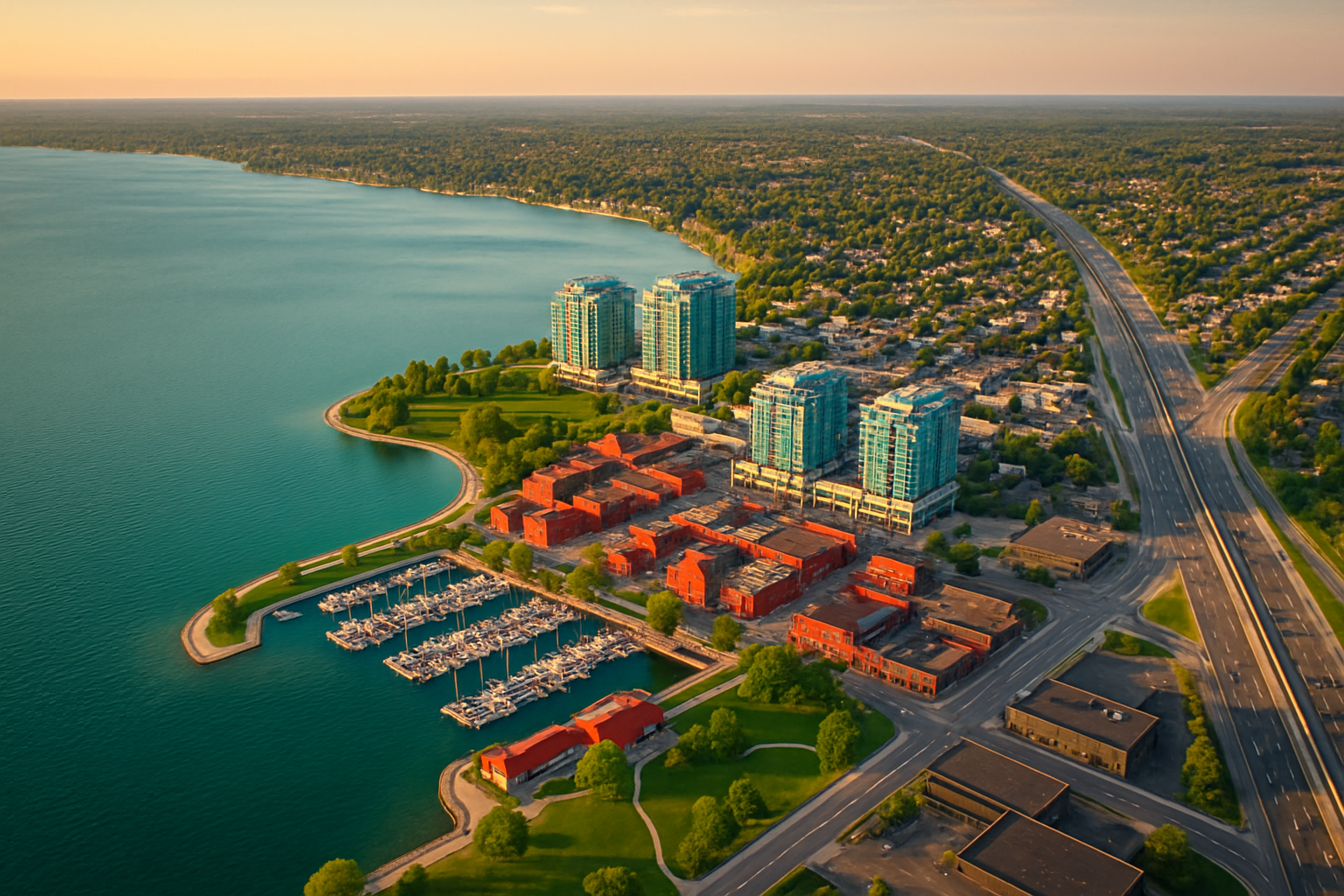
Barrie operates as Central Ontario's largest city with a startup ecosystem shaped by Toronto commuter proximity, outdoor lifestyle appeal, and emerging tech infrastructure. It's small, growing, and positioned between Toronto's market access and Muskoka's quality of life—offering specific advantages for founders optimizing for affordability while maintaining southern Ontario connectivity.
This article is for founders evaluating Barrie as a potential base, investors assessing Central Ontario opportunities, and anyone trying to understand how geographic positioning between major markets and recreational regions shapes emerging ecosystems. We'll cover the infrastructure, the lifestyle advantages, the market limitations, and who benefits most from building here.
What Makes Barrie Different
Barrie's ecosystem reflects its position as a gateway city between Toronto and Ontario's cottage country, with growing population and evolving economic base.
Toronto commuter belt positioning creates access. Barrie sits roughly 90 minutes north of Toronto via Highway 400, close enough for weekly meetings or customer visits while maintaining significantly lower costs. GO Transit rail service connects Barrie to Toronto, though commute times are substantial. According to City of Barrie economic data, the city's population has grown over 20% in the past decade, driven partly by Toronto housing affordability refugees.
Quality of life drives talent attraction. Barrie sits on Kempenfelt Bay (Lake Simcoe) with water access, proximity to skiing at Blue Mountain, and gateway position to Muskoka cottage country. For professionals seeking outdoor recreation and small-city lifestyle while maintaining career opportunities, Barrie offers compelling positioning.
Georgian College provides local talent. While not a research university, Georgian College produces technology diploma graduates in software development, IT infrastructure, and business programs. The scale is modest—perhaps 200-300 tech-relevant graduates annually—but creates a baseline talent pipeline.
Cost of operation is substantially lower than Toronto. Office space and housing run 50-60% below Toronto prices while being 30-40% below even Hamilton or Waterloo. According to Royal LePage's 2025 market data, Barrie's average home price is approximately $700,000 compared to Toronto's $1.1 million.
Manufacturing and distribution presence exists. Barrie has manufacturing facilities and distribution centers serving southern Ontario, creating some industrial expertise and logistics knowledge, though not at Hamilton or Windsor's scale.
Real Advantages for Startups
Lifestyle recruitment works for specific profiles. If you're recruiting professionals tired of Toronto's pace, cost, and commute times, Barrie's outdoor access and affordability create genuine appeal. Parents seeking better schools and housing affordability while maintaining tech careers find Barrie compelling. This helps retention even when salaries can't match Toronto.
Cost efficiency extends runway dramatically. The same seed capital that funds 12 months in Toronto funds 20-24 months in Barrie. This creates significant time to validate product-market fit, iterate, or reach revenue milestones without fundraising pressure. For insights on capital efficiency, this analysis of financial sustainability explores runway optimization approaches.
Remote work enables Toronto talent access. Barrie companies can hire Toronto-based professionals working remotely or in hybrid arrangements, accessing larger talent pools while maintaining Barrie cost structures. This geographic arbitrage—Toronto talent at Barrie costs—creates strategic advantages.
Growing population provides expansion potential. As Barrie grows and attracts Toronto refugees, the local market for B2C products and services expands. While still small, the trajectory is positive in ways static small cities don't offer.
Less competition for local talent. You're not competing with hundreds of startups for Georgian College graduates or local professionals. Smaller talent pool means less bidding war pressure on compensation.
Severe Limitations and Challenges
Market size is very small. Barrie metro has roughly 215,000 people. There's minimal local customer base for B2B software or most tech products. Companies must target Toronto, broader Ontario, or national markets from day one.
Ecosystem infrastructure is essentially nonexistent. Barrie lacks accelerators, established mentor networks, venture capital, or the service provider ecosystem that even mid-sized tech cities provide. Founders operate independently or travel to Toronto for ecosystem access.
Venture capital requires Toronto entirely. Barrie has essentially no local venture capital or angel investor community. Any meaningful fundraising requires Toronto relationships and regular travel for investor meetings. According to Canadian Venture Capital and Private Equity Association data, Barrie attracted negligible venture investment in 2024.
Talent depth is extremely limited. Georgian College produces modest numbers of graduates, and experienced senior engineers, product managers, or specialized technical roles essentially don't exist locally. Scaling requires remote hiring or convincing people to relocate, which is challenging without established company reputation.
Transit to Toronto is slow and limited. GO Train service exists but takes 2+ hours to reach downtown Toronto. Highway 400 traffic can be severe during rush hours. The connection to Toronto is real but friction-filled, making daily collaboration impractical.
Tech ecosystem is nascent, not established. While growing, Barrie's startup scene lacks the density for meaningful network effects. Finding advisors with relevant experience, connecting with peers solving similar problems, or learning from others' successes requires looking outside Barrie.
What's Changed in 2026
Toronto housing crisis drove population growth. As Toronto became increasingly unaffordable, professionals and young families relocated to Barrie while working remotely for Toronto companies. This brought some tech talent and professional expertise that didn't exist previously.
Remote work normalized distributed operations. Barrie companies can now build distributed teams across Ontario or nationally while maintaining low-cost headquarters. This addresses talent constraints while preserving cost advantages.
Co-working and startup spaces emerged. While limited, some co-working facilities and small business incubators have opened, providing basic infrastructure that didn't exist five years ago.
Cottage country tech workers became viable demographic. Professionals working remotely for Toronto or US companies while living in Barrie for lifestyle created a small but growing pool of experienced tech workers available for local opportunities.
Infrastructure investment increased. Highway improvements and transit expansion connecting Barrie to Toronto reduced commute friction somewhat, though fundamental distance constraints remain.
Who Should Build in Barrie
Bootstrapped founders prioritizing runway. If you're building without venture capital or stretching seed funding as far as possible, Barrie's cost structure creates exceptional runway economics. Reaching profitability becomes achievable when burn rate is 50-60% below Toronto. For perspective on sustainable growth, this exploration of efficient scaling examines profitable business models.
Remote-first companies prioritizing lifestyle. If you're building a distributed team from day one and want headquarters in a location that supports founder and early team quality of life, Barrie's outdoor access and affordability work well.
Solo founders or very small teams. If you're a technical founder building solo or with one co-founder, Barrie's low costs and lack of ecosystem distractions can create focus. You're not paying for ecosystem density you're not using anyway.
Companies with established Toronto customer base. If you already have Toronto customers or relationships and are looking to reduce costs while maintaining access, Barrie's positioning allows periodic Toronto visits while dramatically lowering operational expenses.
Lifestyle-focused businesses serving recreational markets. If you're building products or services for outdoor recreation, cottage owners, or tourism industries, Barrie's positioning in these markets provides domain context.
Who Should Consider Alternatives
Venture-backed startups requiring capital access. If your business model requires raising multiple rounds, Barrie's complete lack of local capital and distance from Toronto investors creates significant friction.
Fast-scaling companies. If you need to hire 20-30 people in a year, Barrie's talent pool can't support that velocity. Toronto, Waterloo, or Ottawa provide necessary scale.
Enterprise B2B software companies. If your customers are major corporations, Barrie provides no proximity advantages and limited ecosystem infrastructure. Toronto, Ottawa, or Waterloo make more sense.
Companies requiring specialized technical talent. If you need AI researchers, experienced enterprise software architects, or domain expertise outside generic software development, Barrie has essentially no local talent pool.
Teams valuing ecosystem density. If learning from peers, accessing mentors, or participating in startup communities matters more than cost optimization, established hubs provide infrastructure Barrie lacks entirely.
The Barrie Calculation
Deciding whether to build in Barrie requires extreme clarity about priorities and acceptance of severe tradeoffs.
Barrie provides exceptional cost efficiency, lifestyle appeal for specific demographics, and some Toronto connectivity while avoiding Toronto costs. For bootstrapped founders, remote-first teams, or solo builders optimizing for runway and quality of life, these advantages create genuine value.
Barrie also imposes severe constraints: no ecosystem infrastructure, essentially no venture capital, extremely limited talent pools, and small local markets. You're building in near-complete isolation from startup ecosystems, occasionally accessing Toronto resources but not embedded in any supportive community.
For most startups, Barrie's limitations make it unviable. But for a narrow set of founders—bootstrapped, remote-first, lifestyle-prioritizing, capital-efficient—Barrie offers cost structure and quality of life combinations that are increasingly rare as tech hubs become expensive.
Understanding how to build effective remote teams becomes essential when local talent pools are minimal. Success requires embracing Barrie as a cost-advantaged base of operations rather than expecting traditional startup ecosystem benefits.
The question isn't whether Barrie can support tech companies—it can support very specific types. The question is whether you're building the exact type of company where Barrie's narrow advantages outweigh its comprehensive limitations.
For bootstrapped solo founders or small remote teams prioritizing lifestyle and runway, Barrie is worth considering. For almost everyone else, it's not.
ShoutEx Insights
- Canadian Startup Ecosystem: Ultimate Guide 2026
- Toronto's Startup Ecosystem: Canada's Tech Capital
- Guelph's Startup Ecosystem: Ontario Innovation Center
- Hamilton's Startup Ecosystem: Emerging Tech Community
- Kingston's Startup Ecosystem: Eastern Ontario Innovation
- Thunder Bay's Startup Ecosystem: Northern Ontario Tech Growth
- Canadian Government Grants and Startup Funding
- How to Raise Seed Funding in Canada
- Tech Talent by Canadian City: Regional Analysis
Further Readings:
- Hiring Trends in Ontario
- Hiring Trends in Canada
- Resume Builder for Canada: How to Create a Job Bank Approved Resume
- Barrie Chamber of Commerce: Business Resources
- City of Barrie Economic Development
- Georgian College: Innovation and Entrepreneurship
- Innovation Guelph: Regional Network
- FedDev Ontario: Regional Economic Development
- Ontario Network of Entrepreneurs: Small Business Support
- BDC: Small Business Financing in Simcoe County
- Statistics Canada: Ontario Regional Labour Market
Last updated by the Team at ShoutEx on January 19, 2026.