
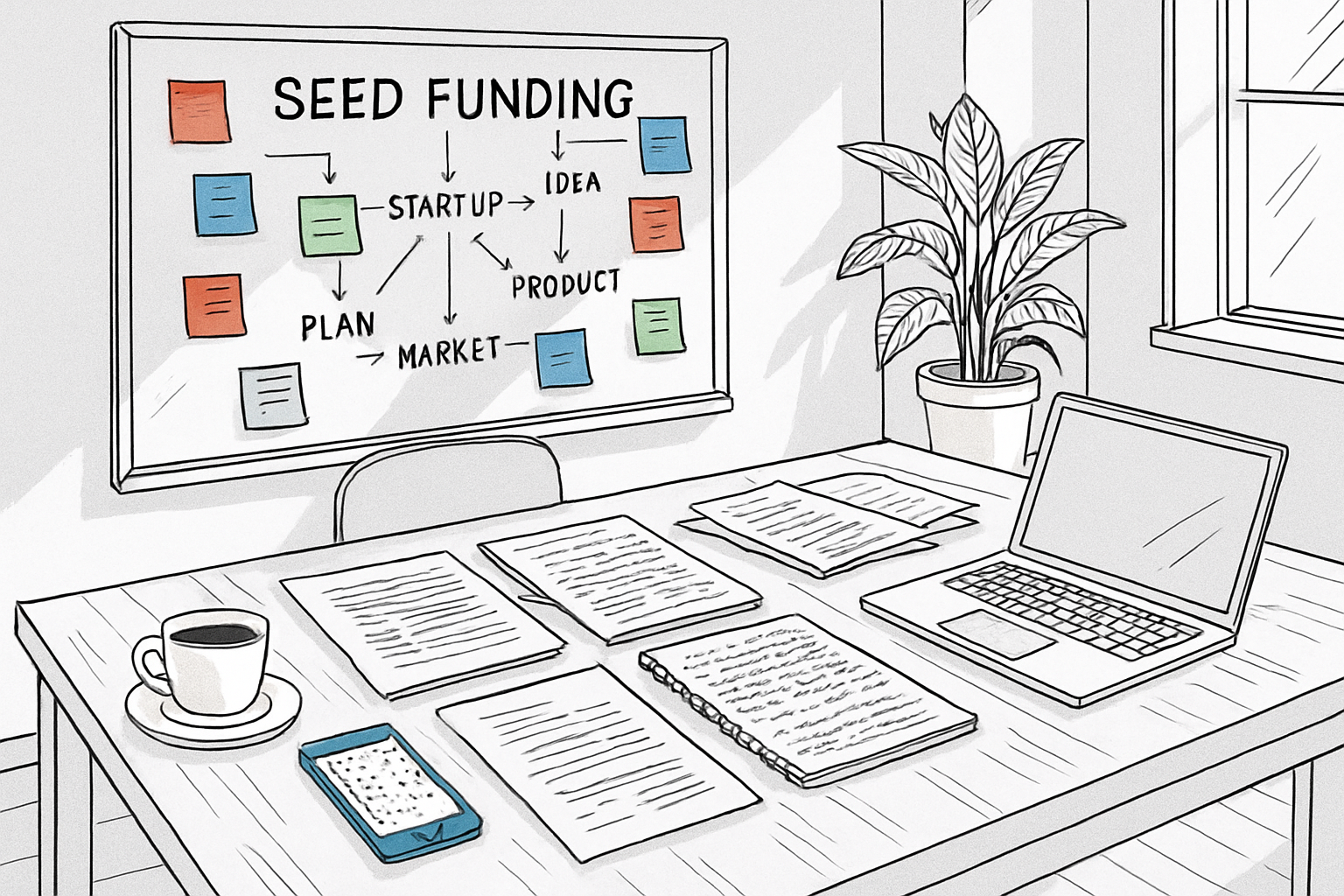
How to Raise Seed Funding in Canada: A Step-by-Step Guide for Founders
Raising seed funding in Canada is not about convincing investors you are “venture scale.”
It is about proving you are directionally correct, capital-efficient, and learning faster than peers.
Most seed rounds fail not because the idea is weak, but because founders approach fundraising as a pitch exercise instead of a systematic process. This guide breaks down how strong Canadian founders raise seed capital in 2026, step by step, without wasting cycles or credibility.
Step 1: Define What “Seed” Actually Means for Your Company
In Canada, seed funding is often misunderstood. Seed is not:
-
“Pre-Series A”
-
A mini growth round
-
Capital to figure everything out
Seed capital is meant to validate product-market fit directionally, not scale it.
Before raising, you must be able to answer:
-
What specific problem are we solving?
-
For whom, exactly?
-
What early signal would prove we are on the right path?
If this is fuzzy, pause. Investors will sense it immediately.
If you need a deeper framework for this phase, revisit ShoutEx’s piece on Seed Funding and Product-Market Fit, which outlines what real validation looks like before scale.
Step 2: Align Your Company With the Canadian Seed Reality
Canadian seed investors are structurally conservative compared to U.S. peers.
They optimize for:
-
Capital efficiency
-
Founder judgment
-
Downside protection
They are skeptical of:
-
Inflated TAM narratives
-
Aggressive hiring plans
-
Premature “platform” stories
Your job is not to look big. Your job is to look sound. That means:
-
Narrow ICP definition
-
Clear explanation of early traction
-
Honest articulation of what still needs to be proven
Credibility beats ambition at seed.
Step 3: Prepare Your Seed Narrative (Not Just a Deck)
A seed narrative is not your slides. It is the logic behind them. Strong seed narratives clearly connect:
-
Problem → Early insight → Product decision → Early signal
You should be able to explain:
-
Why customers care now
-
Why existing solutions fall short
-
Why your approach is meaningfully different
-
What you expect to learn with seed capital
If investors ask similar clarification questions repeatedly, your narrative is not tight enough.
Guide for Founders
Canadian Startup Ecosystem
Step 4: Build the Right Investor List (This Matters More Than You Think)
One of the most common mistakes founders make is pitching everyone. Do not.
Instead:
-
Focus on Canadian funds that explicitly invest at seed
-
Study their portfolio patterns, not their marketing
-
Prioritize relevance over brand recognition
A smaller, highly targeted list converts better than a wide funnel.
Signal to investors that you chose them intentionally.
Step 5: Run the Raise Like a Structured Process
Seed rounds stall when founders treat meetings as one-offs.
High-performing founders:
-
Run fundraising in defined sprints
-
Track conversations like a sales pipeline
-
Actively refine messaging based on feedback
You should know:
-
Who is moving forward
-
Who is stalling
-
Why decisions are delayed
Polite interest without momentum is not progress.
Step 6: Understand What Canadian Seed Investors Are Underwriting
At seed, investors are underwriting you, not scale. They assess:
-
Founder decision quality
-
Speed of learning
-
Ability to attract early customers
-
Realism under uncertainty
They are asking themselves: “Will this team use capital wisely even if things go wrong?”
Your answers, tone, and trade-off thinking matter as much as metrics.
Step 7: Close With Clarity, Not Pressure
Seed rounds close when confidence accumulates. Founders who succeed:
-
Communicate timelines clearly
-
Share progress updates thoughtfully
-
Create momentum through execution, not urgency tactics
If you need artificial pressure to close, something is off.
Strong rounds close because the logic becomes undeniable.
Final Perspective for Founders
Raising seed funding in Canada is not about hype or bravado. It is about clarity, discipline, and trust.
If you focus on:
-
Tight problem definition
-
Honest traction signals
-
Aligned investors
-
A structured process
You dramatically improve your odds. Seed capital is not a reward. It is a responsibility.
Treat it that way, and investors will too.
Disclaimer
This content is for general information only and does not constitute legal, financial, or investment advice. Outcomes are not guaranteed; external resources are provided without warranty or endorsement, and founders should consult qualified professionals for decisions about fundraising, securities, and capital strategy.
ShoutEx Insights
- Canadian Startup Ecosystem: Ultimate Guide 2026
- Series A Funding in Canada: Complete Guide
- Canadian VC Guide for Founders
- Top 25 Canadian VCs: Investment Landscape
- Canadian Government Grants and Startup Funding
- Canadian Startup Valuations: Understanding the Market
- How to Approach Canadian VCs: Founder's Playbook
- Raising VC Funds: Strategic Approach for Founders
- Seed Funding Positioning Before Scaling
Further Readings:
- Hiring Trends in Canada
- Ontario Job Posting Law 2026: Salary Range, AI Disclosure, and Record Requirements
- How to Write a Canadian Resume as an International Student
- BDC Capital: Venture Capital for Canadian Startups
- Canadian Venture Capital Association: Industry Resources
- Futurpreneur Canada: Startup Financing Programs
- Innovation, Science and Economic Development Canada
- Startup Canada: Entrepreneurship Resources
- AngelList: Canadian Startup Funding Platform
- BetaKit: Canadian Tech Funding News
- Techcouver: Canadian Venture Capital Insights
Last updated by the Team at ShoutEx on January 19, 2026.
Frequently Asked Questions
What does seed funding actually mean for a Canadian startup?
Seed funding in Canada is capital to validate that you are directionally on the path to product‑market fit, not to scale a proven engine. It should help you sharpen problem definition, customer segment, and early traction signals, rather than fund aggressive hiring or platform visions.
How is Canadian seed funding different from U.S. seed funding?
Canadian seed investors tend to be more conservative, placing greater weight on capital efficiency, founder judgment, and downside protection than on big TAM stories. As a result, clear thinking and disciplined plans usually matter more than hype or inflated growth projections.
What should a strong Canadian seed narrative include?
A strong seed narrative links problem, customer insight, product decisions, and early traction into one coherent logic. Investors should quickly see why customers care now, why current options fall short, how your product is different, and what you plan to learn with seed capital.
How many investors should I approach for a seed round in Canada?
Instead of pitching everyone, focus on a targeted list of funds and angels that actively invest at seed and have relevant portfolio patterns. A smaller, well‑researched list typically converts better than a spray‑and‑pray approach and signals you are deliberate about partner fit.
What are Canadian seed investors really underwriting?
At seed, investors are primarily underwriting the founding team’s decision quality, learning speed, and ability to use capital wisely under uncertainty. Early customers, thoughtful trade‑offs, and realistic plans often carry more weight than absolute revenue numbers at this stage.
How should I run my Canadian seed raise to avoid stalling?
Treat the raise as a structured, time‑boxed process, tracking investors like a sales pipeline with clear stages, next steps, and reasons for stalls. Polite interest without forward motion should be treated as a signal to refine narrative, targeting, or proof points.
How do I know if it is the right time to raise seed in Canada?
It is usually the right time when you have a tight problem definition, some honest traction signals, and a clear plan for what seed capital will validate. If you are still fuzzy on who you serve, what you are proving, or why now, it is better to tighten the strategy before going out.