
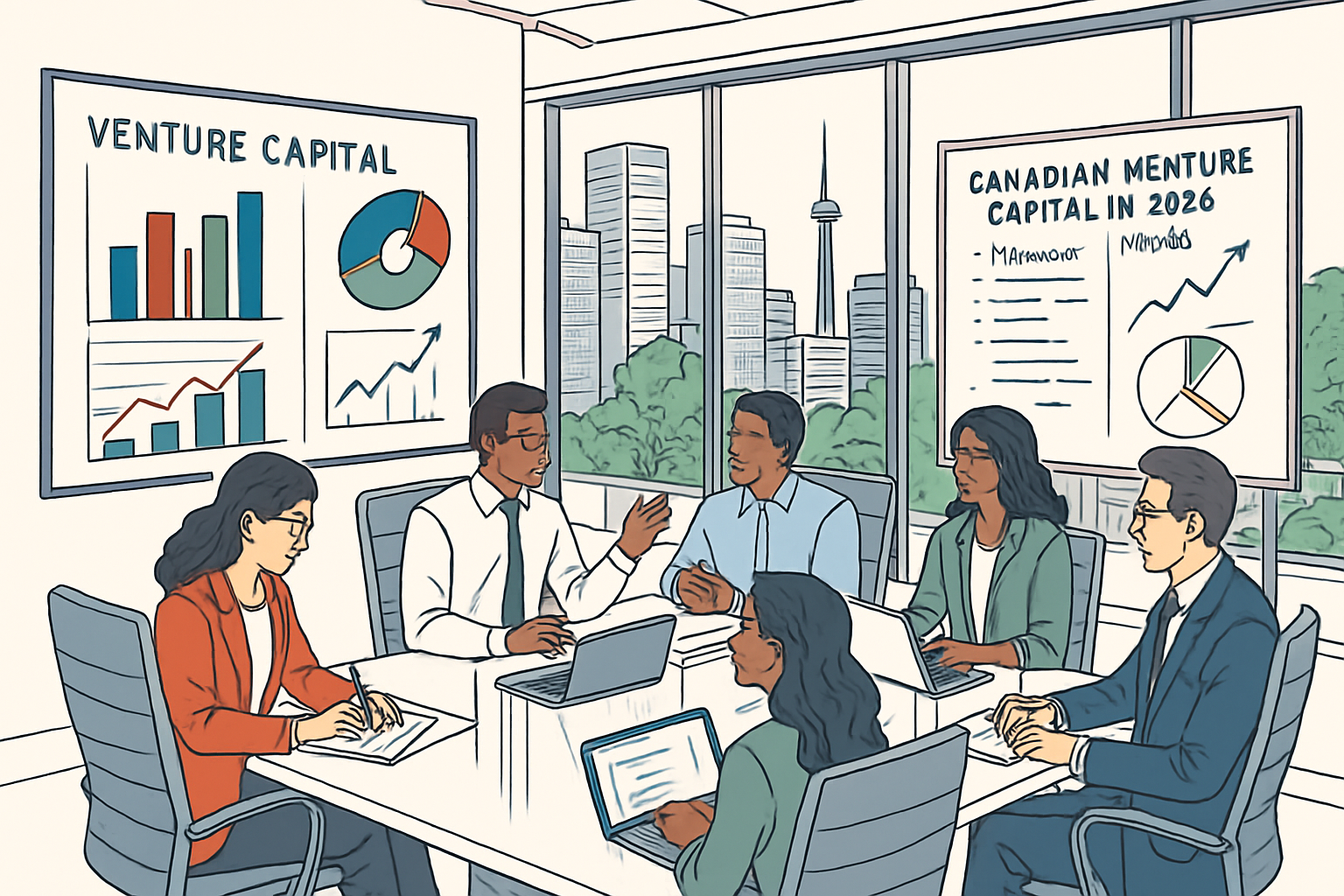
If you are building a serious company in Canada in 2026, venture capital is no longer about storytelling polish. It is about decision quality under constraint. Investors are optimizing for downside protection and conviction. Founders must do the same.
The Structural Shift Behind Canadian VC in 2026
Three forces are shaping outcomes right now:
-
LP pressure
Canadian funds are being measured on capital efficiency and follow-on discipline, not logo count. -
Internal reserve tension
Many funds are effectively managing two portfolios: existing companies that need support and new bets that must clear a higher bar. -
Signal compression
Metrics that used to be “nice to have” are now binary filters.
This is why founders feel meetings are polite but progress is slow. The bar moved. Quietly.
The Metrics That Actually Matter by Stage
Founders often ask, “What numbers do I need?”
The better question is, “What confidence does the investor need?”
Pre-Seed and Seed: Confidence in Direction
You are not selling scale yet. You are selling judgment.
Investors look for:
-
Clear problem ownership, not broad opportunity
-
Early customer pull, even if revenue is small
-
Evidence you know what not to build
A strong signal in 2026 is not ARR. It is the quality of your early customer conversations and decisions.
Series A: Confidence in Repeatability
This is where many Canadian founders misjudge timing.
Investors need to see:
-
One clear go-to-market motion that works
-
Sales or activation cycles that can be explained, not just shown
-
A realistic view of where growth breaks
If your story relies on “we just need more reps,” you are early.
Series B+: Confidence in Control
At this stage, capital wants predictability.
You are evaluated on:
-
Segment-level unit economics
-
Expansion logic that does not depend on heroics
-
Leadership depth beyond the founding team
Canadian investors are particularly sensitive to operational fragility here.
Regional Capital Culture, Revisited with Founder Implications
Let’s make this more practical.
Ontario
Works best if you:
-
Can explain your buyer’s buying process
-
Are comfortable with longer cycles and enterprise nuance
-
Show discipline in forecasting
Ontario rewards founders who sound like operators, not visionaries.
British Columbia
Works best if you:
-
Have product clarity early
-
Can articulate global relevance
-
Move fast without overclaiming
Vancouver capital responds to sharp products and crisp differentiation.
Quebec
Works best if you:
-
Respect technical depth
-
Show strong founder-market fit
-
Can translate complexity into business value
Montreal investors do not fund vague ambition.
How Strong Founders Run the Raise Itself
This is where experience shows.
Effective founders:
-
Treat fundraising as a 90-day strategic project
-
Run tight feedback loops on narrative and objections
-
Track investor signals like a sales pipeline
They do not “check in” with investors.
They progress them.
A weak raise feels exhausting. A strong raise feels methodical.
Common Failure Patterns We See in 2026
These are not obvious mistakes. They are subtle ones.
-
Over-optimizing valuation instead of partner fit
-
Pitching national when traction is still local
-
Using AI or platform language without operational grounding
-
Confusing interest with intent
If multiple investors stall at the same point, the issue is not the market. It is the framing.
A Simple Self-Check for Founders
Before you book your next investor meeting, answer this honestly:
-
Can I explain why our metrics look the way they do?
-
Do I know which assumption would kill this business fastest?
-
Am I raising to accelerate something that already works?
If any answer is fuzzy, tighten before you pitch.
Final Thought
Canadian venture capital in 2026 rewards founders who think clearly under pressure.
Not louder founders.
Not trend-chasers.
Clear ones.
If you read this and felt a quiet sense of alignment rather than excitement, that is a good sign. That is how real fundraising clarity feels.
Disclaimer
This content is for general information only and does not constitute legal, financial, or investment advice. Outcomes are not guaranteed. External resources are provided without warranty or endorsement. Always consult qualified professionals for decisions about fundraising, securities, and capital strategy.
ShoutEx Insights
- Canadian Startup Ecosystem: Ultimate Guide 2026
- Top 25 Canadian VCs: Investment Landscape
- How to Approach Canadian VCs: Founder's Playbook
- How to Raise Seed Funding in Canada
- Series A Funding in Canada: Complete Guide
- Canadian Startup Valuations: Understanding the Market
- Raising VC Funds: Strategic Approach for Founders
- Canadian Government Grants and Startup Funding
- From Canadian MVP to Series A: Growth Journey
Further Readings:
- Hiring Trends in Canada
- How to Get an Entry Level Job in Today's Competitive Canadian Job Market
- Job Search Strategy 2026: How to Stop Wasting Effort and Start Getting Interviews
- Canadian Venture Capital Association: Industry Data
- BDC Capital: Venture Capital Arm
- Crunchbase: Canadian VC Database
- Pitchbook: Canadian Venture Capital Intelligence
- Investment Canada: Foreign Investment Guidelines
- Innovation, Science and Economic Development Canada
- Globe and Mail: Canadian Venture Capital News
- BetaKit: Canadian Tech and Startup News
Last updated by the Team at ShoutEx on January 19, 2026.
Frequently Asked Questions
Why does fundraising in Canada feel slower and more polite in 2026?
Because LPs are pushing funds to prioritize capital efficiency and disciplined follow‑on, partners are taking more time to build conviction and protect downside rather than chasing logo count. That creates more “polite interest” and fewer fast yes/no answers, which founders experience as stalled processes.
What do investors actually want to see at pre‑seed and seed now?
At the earliest stages, investors are buying judgment more than scale, so they care about clear problem ownership, tight customer conversations, and proof you know what not to build. Early customer pull and a sharp understanding of your riskiest assumptions signal better than raw ARR at this point.
When is a Canadian startup really ready for a Series A in 2026?
You are ready when you have one repeatable go‑to‑market motion with explainable sales or activation cycles and visibility into where growth breaks as you add volume. If your plan mostly hinges on “we just need more reps,” most A‑stage investors will treat you as early and keep you in the watchlist bucket.
What changes at Series B and beyond?
From Series B onward, capital is underwriting control and predictability, so segment‑level unit economics, non‑heroic expansion logic, and leadership depth become non‑negotiable. Canadian investors are especially wary of operational fragility at this stage, so messy ops or single‑threaded leadership will kill momentum quickly.
How should founders adapt their fundraising approach to this environment?
Strong founders run a 90‑day, project‑managed raise: target list, pipeline stages, and weekly feedback loops on objections and narrative. They track investor behavior like a sales funnel, progressing people through clear next steps instead of “checking in.”
How do regional differences (Ontario, BC, Quebec) affect my raise?
Ontario capital rewards operator‑style clarity on buyer process, forecasting discipline, and comfort with enterprise‑length cycles. BC leans toward sharp, globally relevant products with crisp differentiation, while Quebec emphasizes technical depth, founder‑market fit, and translating complexity into business value.
What are the most common fundraising mistakes founders make in 2026?
Subtle but costly patterns include over‑optimizing for valuation instead of partner fit, pitching a national story on local traction, and using AI/platform buzzwords without operational proof. Another frequent issue is confusing broad interest with intent and failing to see that repeated stalls usually point to a framing or clarity problem, not market rejection.