
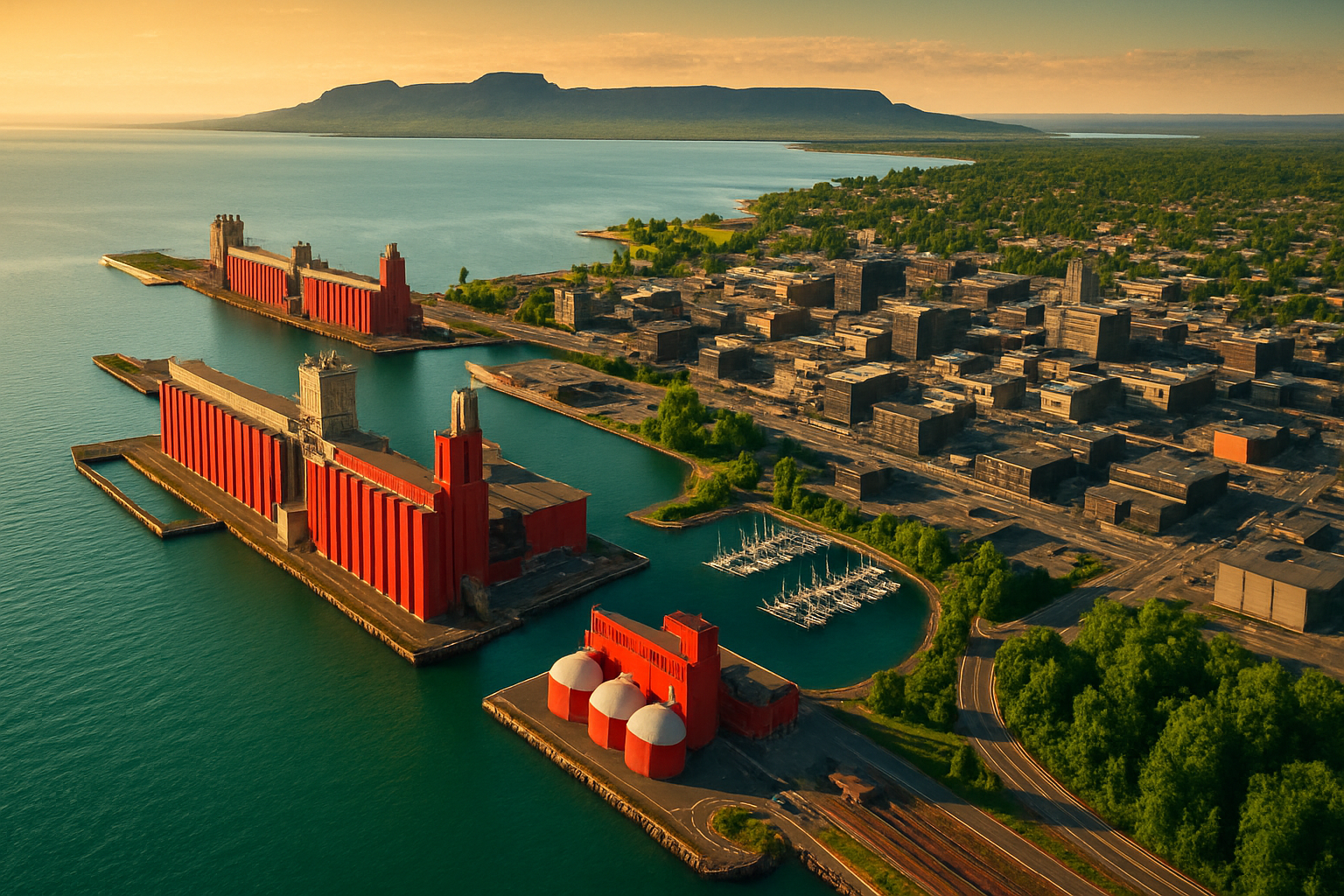
Thunder Bay operates as Northwestern Ontario's largest city with a startup ecosystem shaped by resource industry expertise, Lakehead University research strength, and geographic isolation that creates both challenges and unexpected advantages. It's remote, affordable, and focused on sectors where location matters less than expertise.
This article is for founders evaluating Thunder Bay as a potential base, investors assessing Northern Ontario opportunities, and anyone trying to understand how resource industries and geographic isolation shape regional ecosystems. We'll cover the infrastructure, the sector-specific advantages, the isolation challenges, and who benefits most from building here.
What Makes Thunder Bay Different
Thunder Bay's ecosystem reflects its position as a regional center for resource industries, transportation, and Northern Ontario services.
Resource industry expertise dominates. Thunder Bay's economy historically centered on forestry, mining, and resource extraction. While these industries have declined from peak employment, decades of operations created expertise in geology, mining engineering, environmental monitoring, and industrial operations. According to Thunder Bay Community Economic Development Commission data, mining and forestry still employ thousands regionally and drive significant economic activity.
Lakehead University provides research strength. Lakehead produces research in forestry, environmental science, engineering, and northern studies. The university's Northern Ontario School of Medicine and research facilities create specialized expertise. According to Lakehead University research data, the institution generates over $30 million in research funding annually, focused on northern and resource-related topics.
Geographic positioning creates time zone advantages. Thunder Bay sits in the Central time zone, one hour behind Toronto but aligned with US Central time. For companies serving Western Canadian or Central US markets, this positioning reduces time zone friction compared to Eastern hubs.
Transportation and logistics infrastructure exists. Thunder Bay's port on Lake Superior handles grain shipping and bulk cargo. The transportation expertise and logistics infrastructure create knowledge in supply chain and shipping, though at smaller scale than major ports.
Cost of operation is extremely low. Office space and housing run 60-70% below Toronto and 40-50% below even mid-sized Ontario cities. According to Royal LePage's 2025 market data, Thunder Bay's average home price is approximately $350,000, making it one of Ontario's most affordable cities.
Real Advantages for Startups
Resource technology opportunities are genuine. If you're building mining technology, forestry monitoring systems, environmental sensors, or geological analysis software, Thunder Bay's expertise and proximity to actual resource operations provide testing environments and domain knowledge. Companies can pilot technology in real mines and forests, not simulations.
Extreme cost efficiency extends runway dramatically. The same seed capital that funds 10 months in Toronto funds 24-30 months in Thunder Bay. This creates exceptional time to validate product-market fit, iterate extensively, or reach profitability without fundraising pressure. For insights on capital efficiency, this analysis of financial sustainability explores runway optimization strategies.
Remote work makes location increasingly viable. If you're building software that doesn't require physical presence with customers, Thunder Bay's costs combined with remote collaboration tools create arbitrage opportunities. You can maintain Thunder Bay expenses while selling globally.
Environmental and northern research partnerships work. Lakehead's research strengths in forestry, environmental science, and northern studies provide partnership opportunities for companies in these domains. Access to specialized researchers and facilities accelerates R&D for relevant sectors.
Outdoor lifestyle supports specific retention. Thunder Bay offers exceptional outdoor recreation—skiing, hiking, kayaking, fishing—at costs making it accessible on modest salaries. For employees prioritizing outdoor lifestyle over urban amenities, Thunder Bay provides genuine appeal.
Less competition creates opportunity. You're not competing with hundreds of companies for limited resources. Government programs, university partnerships, and local business support provide higher touch assistance because demand is lower.
Severe Isolation and Market Challenges
Geographic isolation is extreme. Thunder Bay sits 7+ hours driving from Toronto, 4+ hours from Winnipeg. There's no nearby major market. Customer visits, investor meetings, or ecosystem participation require flights or very long drives. This isolation fundamentally shapes what's viable.
Market size is tiny. Thunder Bay metro has roughly 125,000 people. Northwestern Ontario adds perhaps another 100,000. There's essentially no local customer base for tech products. Companies must target southern Ontario, national, or international markets from day one.
Venture capital is completely absent. Thunder Bay has essentially no angel investors or venture capital. Any meaningful fundraising requires Toronto investors, which means regular travel and relationship-building from extreme distance. According to Canadian Venture Capital and Private Equity Association data, Thunder Bay attracted essentially no venture investment in 2024.
Talent pool is extremely limited. Lakehead produces perhaps 100-150 engineering and computer science graduates annually. Experienced senior engineers, product managers, or specialized roles essentially don't exist locally. Scaling beyond tiny teams requires remote hiring entirely.
Ecosystem infrastructure doesn't exist. Thunder Bay has no startup accelerators, minimal mentorship networks, and very limited service providers understanding tech company needs. Founders operate in complete isolation from startup ecosystems.
Brain drain is severe and constant. Nearly all top graduates leave for Toronto, Waterloo, or other major markets immediately after graduation. Convincing talented people to stay or relocate to Thunder Bay is extremely challenging.
What's Changed in 2026
Remote work normalized globally distributed teams. Thunder Bay companies can now hire from anywhere while maintaining Thunder Bay cost bases. This is perhaps the single most important change making Thunder Bay more viable for certain business models.
Resource technology investment increased. Mining automation, environmental monitoring, and sustainable forestry technology are attracting investment. Thunder Bay's proximity to actual resource operations positions it for companies in these specific domains.
Northern connectivity improved slightly. Better internet infrastructure and improved flight connections to Toronto reduced isolation friction somewhat, though fundamental distance constraints remain.
Climate change research accelerated. Northern regions' role in climate science and environmental research increased Lakehead's relevance and created partnership opportunities for environmental technology companies.
Government support for northern innovation expanded. Federal and provincial programs specifically targeting Northern Ontario innovation provide grants and support, though at modest absolute scale.
Who Should Build in Thunder Bay
Resource technology companies. If you're building mining automation, geological analysis software, forestry monitoring systems, or environmental sensors for resource industries, Thunder Bay's expertise and operational proximity provide genuine advantages despite isolation.
Extremely bootstrapped founders. If you're building with minimal or no external capital and need maximum runway, Thunder Bay's costs create 2-3x runway extension versus southern Ontario cities. For perspective on sustainable business models, this exploration of profitable growth examines capital-efficient approaches.
Remote-first software companies. If you're building fully distributed teams from day one and location doesn't matter for your business model, Thunder Bay's costs while maintaining Canadian incorporation create tax and operational advantages.
Environmental and northern technology startups. If your product addresses climate science, northern environmental challenges, or Indigenous community technology needs, Thunder Bay's research partnerships and geographic context provide relevant ecosystem support.
Solo founders or tiny teams prioritizing lifestyle. If you're a technical founder building alone or with one co-founder and prioritize outdoor lifestyle over urban amenities, Thunder Bay offers quality of life at exceptional affordability.
Who Should Consider Alternatives
Venture-backed startups. If your business model requires raising multiple rounds from institutional investors, Thunder Bay's complete lack of local capital and extreme distance from Toronto make it essentially unviable.
Companies requiring specialized technical talent. If you need to hire experienced engineers, AI researchers, or domain experts in anything other than resource industries, Thunder Bay has no local talent pool whatsoever.
Enterprise B2B software companies. If your customers are major corporations or you need frequent face-to-face sales meetings, Thunder Bay's isolation creates insurmountable friction.
Fast-scaling companies. If you need to hire more than 5-10 people, Thunder Bay's talent constraints make growth impossible without building entirely distributed teams.
Teams requiring ecosystem support. If mentorship, peer learning, or startup community participation matters to your success, Thunder Bay provides none of this infrastructure.
Anyone uncomfortable with extreme isolation. If being 7+ hours from major markets, limited cultural amenities, or geographic remoteness creates anxiety or operational challenges, Thunder Bay won't work regardless of cost advantages.
The Thunder Bay Calculation
Deciding whether to build in Thunder Bay requires brutal honesty about whether extreme cost advantages justify complete ecosystem isolation.
Thunder Bay provides perhaps the lowest operating costs in Ontario, genuine resource industry expertise, and exceptional runway extension for bootstrapped companies. For the tiny subset of companies where these advantages matter more than everything else, Thunder Bay creates opportunities.
Thunder Bay also imposes complete isolation from markets, customers, investors, talent, and startup ecosystems. You're building in geographic and professional isolation, occasionally accessing southern Ontario resources but fundamentally operating alone.
For 99% of startups, Thunder Bay's isolation makes it unviable regardless of cost advantages. But for that 1%—resource tech companies, extremely bootstrapped solo founders, or remote-first teams where location is truly irrelevant—Thunder Bay offers cost structures and sector expertise that are genuinely unique.
Understanding how to build effective distributed teams becomes absolutely essential, as local hiring beyond tiny scale is impossible. Success requires treating Thunder Bay purely as a cost-advantaged incorporation and operations base, not expecting any traditional ecosystem benefits.
The question isn't whether Thunder Bay can support tech companies—it can support very specific types in specific sectors. The question is whether you're building in exactly the right domain (resource tech, environmental monitoring) or have exactly the right model (solo founder, fully remote, ultra-bootstrapped) where Thunder Bay's unique combination of costs and expertise creates net advantages.
For resource technology companies and extremely capital-efficient remote-first businesses, Thunder Bay is underrated. For everyone else, the isolation overwhelms the cost savings.
ShoutEx Insights
- Canadian Startup Ecosystem: Ultimate Guide 2026
- Toronto's Startup Ecosystem: Canada's Tech Capital
- Ottawa's Startup Ecosystem: Government and Tech Innovation
- Barrie's Startup Ecosystem: Ontario Regional Growth
- Kingston's Startup Ecosystem: Eastern Ontario Innovation
- Canadian Government Grants and Startup Funding
- How to Raise Seed Funding in Canada
- Tech Talent by Canadian City: Regional Analysis
- Complete Guide to Canadian Startup Accelerators and Incubators
Further Readings:
- Hiring Trends in Ontario
- Hiring Trends in Canada
- Resume Builder for Canada: How to Create a Job Bank Approved Resume
- Thunder Bay Ventures: Regional Innovation Support
- Community Economic Development Corporation: Thunder Bay
- Lakehead University: Research and Innovation
- Northern Ontario Heritage Fund Corporation
- FedNor: Northern Ontario Economic Development
- Ontario Network of Entrepreneurs: Regional Programs
- BDC: Small Business Financing in Northern Ontario
- Statistics Canada: Northern Ontario Economic Data
Last updated by the Team at ShoutEx on January 19, 2026.