
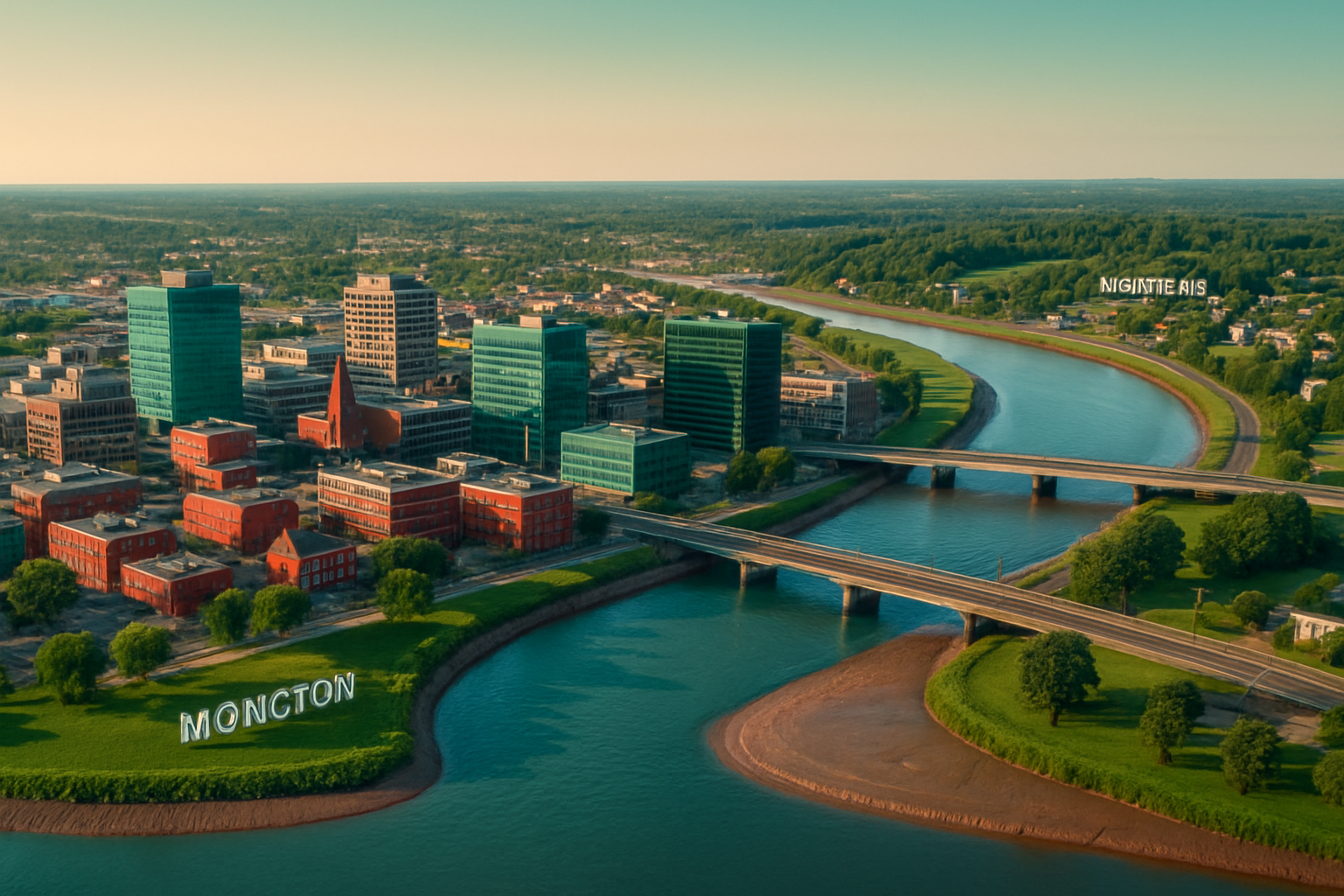
Moncton operates as New Brunswick's largest city with a startup ecosystem shaped by bilingualism, call center legacy transitioning to technology, and positioning as Atlantic Canada's geographic crossroads. It's affordable, officially bilingual, and increasingly focused on attracting technology companies through aggressive incentives and quality of life positioning.
This article is for founders evaluating Moncton as a potential base, investors assessing Maritime opportunities, and anyone trying to understand how bilingualism and geographic positioning create regional ecosystem advantages. We'll cover the infrastructure, the bilingual advantages, the market limitations, and who benefits most from building here.
What Makes Moncton Different
Moncton's ecosystem reflects its position as New Brunswick's economic center and Canada's only officially bilingual province's largest city.
Bilingualism is structural advantage. Moncton operates in both English and French by necessity, creating workforce fluency in both languages. According to Statistics Canada census data, over 35% of Moncton residents are bilingual, significantly higher than most Canadian cities. This creates advantages for companies targeting Quebec, francophone markets, or requiring bilingual customer service.
Call center expertise transitioned to technology. Moncton built significant operations in customer service and call centers, creating expertise in remote work, distributed operations, and service delivery. This legacy is transitioning toward technology services, cloud operations, and digital customer experience. According to Greater Moncton Economic Development data, technology and digital services now employ over 5,000 people regionally.
Geographic positioning creates logistics advantages. Moncton sits at the geographic center of the Maritimes, roughly equidistant from Halifax (2.5 hours), Saint John (1.5 hours), and Fredericton (1.5 hours). For companies serving Atlantic Canada, this central location reduces travel and distribution costs.
Cost of operation is very low. Office space and housing run 50-60% below Toronto and 30-40% below Halifax. According to Royal LePage's 2025 market data, Moncton's average home price is approximately $320,000, making it one of Atlantic Canada's most affordable cities while maintaining urban amenities.
Universities provide bilingual talent. Université de Moncton (francophone) and Mount Allison University (nearby anglophone) produce graduates in engineering, computer science, and business. The combination creates bilingual talent pipeline unique in Atlantic Canada.
Real Advantages for Startups
Bilingual workforce creates market access advantages. If you're building products or services for Quebec, francophone markets, or requiring customer service in both official languages, Moncton's bilingual talent pool reduces hiring friction and expansion costs. This is particularly valuable for SaaS companies needing bilingual support or companies targeting both English and French Canadian markets.
Remote work and distributed operations expertise exists. Decades of call center and remote service delivery created operational knowledge in managing distributed teams, quality assurance, and remote customer interaction. For companies building remote-first operations, this expertise transfers directly.
Extreme cost efficiency extends runway dramatically. The same seed capital that funds 12 months in Toronto funds 22-26 months in Moncton. For bootstrapped companies or teams stretching venture funding, this creates exceptional time to validate product-market fit. For insights on capital efficiency, this analysis of financial sustainability explores runway optimization strategies.
Government incentives are aggressive. New Brunswick offers tax credits, wage subsidies, and relocation incentives specifically targeting technology companies. According to Opportunities New Brunswick data, the province provides some of Canada's most generous startup incentives as economic development strategy.
Atlantic immigration programs facilitate hiring. Atlantic Immigration Program makes bringing international talent more accessible than most provinces. Immigration, Refugees and Citizenship Canada data shows Atlantic provinces consistently process immigration applications efficiently.
Quality of life supports retention. Moncton offers affordable housing, outdoor recreation, bilingual culture, and small-city pace. Employees can own homes and maintain quality of life on salaries 30-40% below Toronto, improving retention despite lower cash compensation.
Significant Limitations and Challenges
Market size is very small. Moncton metro has roughly 160,000 people. New Brunswick has 800,000 total. There's minimal local customer base for tech products. Companies must target national or international markets from day one.
Ecosystem infrastructure is developing. Moncton has some startup support through Venn Innovation and Launch36, but infrastructure doesn't match Halifax or central Canadian hubs. Mentorship networks, service providers, and ecosystem density are limited.
Venture capital is scarce. Moncton has angel investors but limited institutional venture capital. Seed funding might come from regional sources or government programs, but Series A and beyond typically requires Halifax, Toronto, or US investors. According to Canadian Venture Capital and Private Equity Association data, New Brunswick attracted approximately $50 million in venture investment in 2024.
Talent depth is limited. Universities produce capable graduates—perhaps 300-400 technology-relevant graduates annually between Université de Moncton and nearby schools—but experienced senior engineers, product managers, or specialized roles are scarce. Scaling requires remote hiring or aggressive recruitment.
Brain drain is constant. Top graduates often leave for Toronto, Halifax, or US markets where compensation and perceived opportunities are higher. Retaining high performers requires competitive equity and genuinely compelling problems.
Geographic isolation from major markets. Moncton sits 2+ hours from Halifax (itself a small market) and much further from Toronto, Montreal, or US tech hubs. Accessing ecosystem resources, investors, or customer concentrations requires significant travel.
What's Changed in 2026
Remote work normalized distributed operations. Moncton companies can hire from Toronto, Montreal, or globally while maintaining Moncton cost bases. This addresses talent constraints while preserving cost advantages, making isolation less constraining for software companies.
Bilingual tech support demand increased. As Canadian companies face pressure to serve customers in both official languages, demand for bilingual customer support, documentation, and service delivery grew. Moncton's bilingual workforce creates outsourcing and technology services opportunities.
Startup ecosystem infrastructure improved. Organizations like Venn Innovation, Pond-Deshpande Centre, and Launch36 matured, providing more structured support than existed previously. The ecosystem remains small but is better organized.
Cloud and digital infrastructure companies emerged. Building on call center legacy, companies providing cloud customer service platforms, digital experience tools, and remote operations software have gained traction.
Cross-regional collaboration increased. Improved digital collaboration tools and transportation connections made participating in Halifax or broader Atlantic ecosystem more feasible without relocating.
Who Should Build in Moncton
Bilingual SaaS and customer service companies. If you're building products requiring bilingual customer support, serving both English and French Canadian markets, or targeting Quebec from English Canada base, Moncton's bilingual talent pool creates genuine advantages.
Remote operations and customer experience technology. If you're building tools for distributed teams, customer service platforms, or remote work infrastructure, Moncton's expertise in remote operations and service delivery provides domain knowledge.
Bootstrapped founders maximizing runway. If you're building without venture capital or stretching seed funding as far as possible, Moncton's costs create 2-2.5x runway extension versus Toronto. Reaching profitability becomes achievable when burn rate is extremely low. For perspective on sustainable growth, this exploration of profitable scaling examines capital-efficient models.
Companies serving Atlantic Canada. If your market is Maritime provinces specifically, Moncton's central geographic location reduces travel and logistics costs versus Halifax or other regional cities.
Remote-first software companies. If you're building distributed teams from day one and location doesn't matter for business model, Moncton's costs and bilingual workforce create operational advantages.
Who Should Consider Alternatives
Venture-dependent growth companies. If your business model requires raising Series B, C, and beyond from institutional investors, Moncton's limited local capital and distance from major VCs creates significant friction.
Companies requiring specialized AI/ML talent. If you need cutting-edge AI researchers or deep machine learning expertise, Montreal or Toronto provide better access to specialized talent pools.
Enterprise B2B software targeting major corporations. If your customers are national corporate headquarters, Moncton's isolation from Toronto or Montreal business centers creates disadvantages.
Fast-scaling startups. If you need to hire 30-50 people in a year, Moncton's talent pool can't support that velocity without building entirely distributed teams.
Consumer product companies. If you're building consumer apps, games, or products requiring design talent and cultural trends, Moncton lacks the creative infrastructure of larger hubs.
The Moncton Calculation
Deciding whether to build in Moncton requires honest assessment of whether bilingual workforce access and cost advantages justify ecosystem limitations.
Moncton provides bilingual talent pools, extreme cost efficiency, remote operations expertise, aggressive government incentives, and quality of life that supports retention. For companies requiring bilingual capabilities, serving Atlantic markets, or optimizing for capital efficiency, these create real advantages.
Moncton also imposes geographic isolation, limited venture capital, moderate talent pools, and developing ecosystem infrastructure. You're operating outside major tech hubs, occasionally accessing Halifax or Toronto resources but fundamentally building independently.
For companies in the right domains—particularly bilingual SaaS, customer experience technology, or remote-first operations—Moncton offers undervalued combinations of workforce capabilities and cost structure. Understanding how to build effective distributed teams becomes essential when scaling requires remote hiring.
The question isn't whether Moncton can support successful tech companies—companies like Proposify, Verto, and others prove it can. The question is whether your business model benefits more from Moncton's bilingual workforce and cost advantages than it suffers from isolation and limited ecosystem density.
For bilingual SaaS companies, customer experience technology, and bootstrapped remote-first businesses, Moncton increasingly makes strategic sense. For venture-backed consumer products or companies requiring specialized talent concentrations, larger hubs provide better infrastructure despite higher costs.
ShoutEx Insights
- Canadian Startup Ecosystem: Ultimate Guide 2026
- Halifax's Startup Ecosystem: Atlantic Canada's Tech Leader
- Fredericton's Startup Ecosystem: New Brunswick Innovation Center
- St. John's Startup Ecosystem: Newfoundland Tech Growth
- Charlottetown's Startup Ecosystem: PEI Tech Community
- Canadian Government Grants and Startup Funding
- How to Raise Seed Funding in Canada
- Tech Talent by Canadian City: Regional Analysis
- Complete Guide to Canadian Startup Accelerators and Incubators
Further Readings:
- Hiring Trends in Canada
- Resume Builder for Canada: How to Create a Job Bank Approved Resume
- How to Write a Canadian Resume as an International Student
- Venn Innovation: Moncton Startup Hub
- Opportunities NB: Economic Development
- ACOA: Atlantic Canada Opportunities Agency
- Greater Moncton: Business Development
- Université de Moncton: Research and Innovation
- Propel ICT: Atlantic Canadian Accelerator
- BDC: Small Business Support in New Brunswick
- Statistics Canada: New Brunswick Labour Market
Last updated by the Team at ShoutEx on January 19, 2026.