
DMZ vs Creative Destruction Lab vs Velocity: Which Canadian Accelerator Is Right for You?
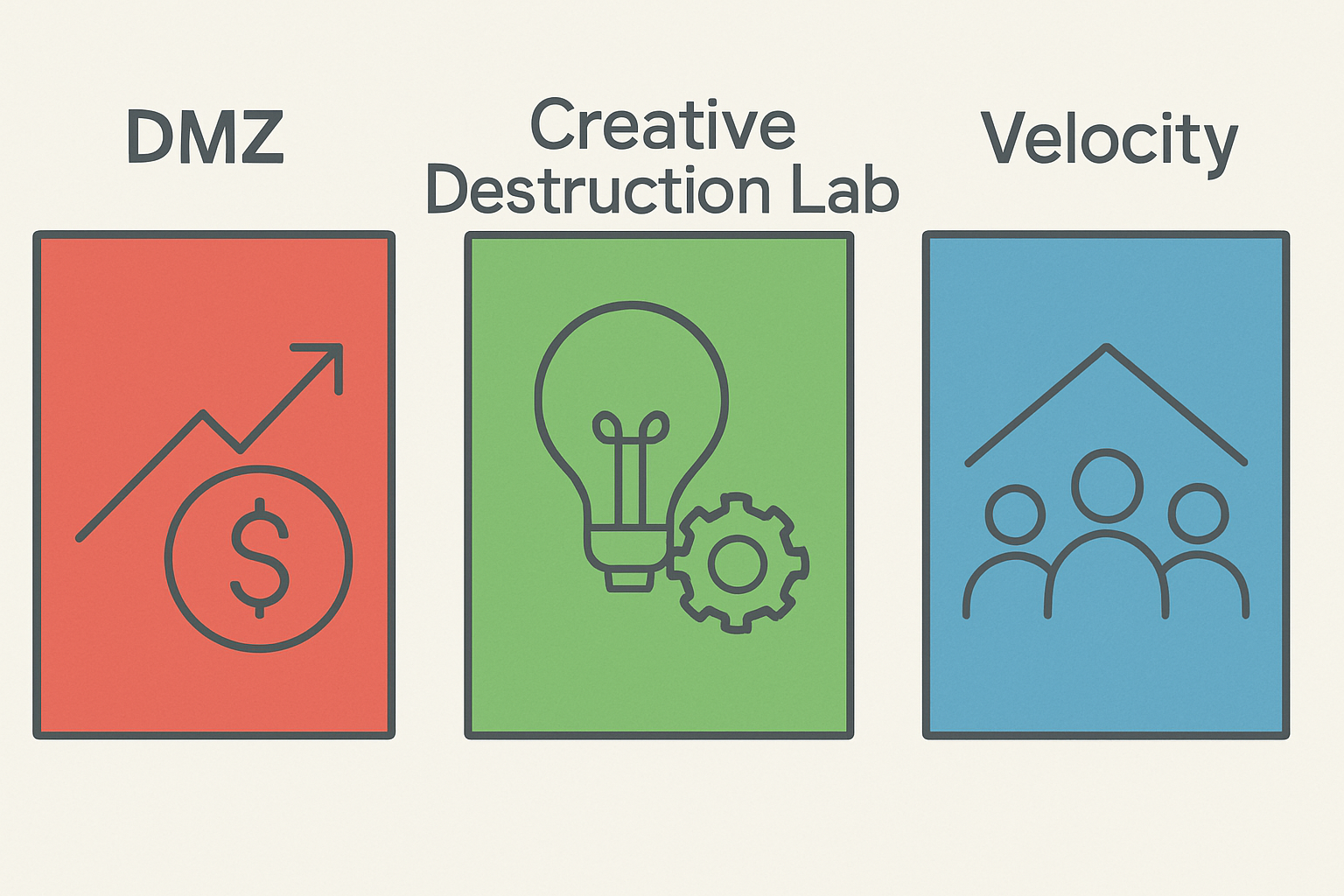
Choosing an accelerator in Canada is not a branding decision. It is a sequencing decision. DMZ, Creative Destruction Lab, and Velocity serve different founder profiles, different stages of clarity, and different definitions of progress. In 2026, picking the wrong one does not just waste time. It can actively slow momentum.
This comparison is designed to help founders choose based on how their company actually operates today, not how they hope it will look six months from now.
What Accelerators Are Optimizing for in 2026
Canadian accelerators have become more selective and more opinionated. They are no longer general support environments. Each program optimizes for a specific form of risk reduction. Founders should evaluate them based on the type of risk they still carry: market risk, technical risk, or execution risk.
The wrong accelerator applies pressure in the wrong place.
DMZ: Go-To-Market and Commercial Readiness
DMZ is best understood as a commercialization engine. It is designed for companies that already have a product direction and need to convert early traction into repeatable revenue. In 2026, DMZ strongly favors founders who are selling, testing pricing, refining positioning, and engaging real customers.
DMZ works well if you have early market signal but lack structure around go-to-market execution. The program emphasizes customer access, partnerships, and operational discipline. It is particularly effective for B2B, platform, and enterprise-adjacent startups that need help navigating long buying cycles and stakeholder complexity.
DMZ is not ideal if you are still figuring out what you are building or why customers should care. Founders without real customer conversations tend to struggle, because the program assumes you are already in market.
Creative Destruction Lab: Technical and Scientific Validation
Creative Destruction Lab operates on a fundamentally different axis. CDL is not about speed to revenue. It is about proof under scrutiny. The program is designed for companies with deep technical or scientific claims that must stand up to expert review.
In 2026, CDL is strongest for AI, deep tech, life sciences, and research-driven startups where the core risk is technical credibility. Founders are expected to defend assumptions, models, and architectures in front of domain experts who are not incentivized to be polite.
CDL is demanding and often uncomfortable. It works best for founders who already know their market direction but need rigorous validation of whether the technology actually holds. It is not a substitute for go-to-market execution and should not be used as one.
Velocity: Formation, Talent, and Early Momentum
Velocity sits earlier in the lifecycle. It is most effective as a formation and incubation environment, particularly for technically strong founders emerging from academic or research contexts.
Velocity supports experimentation, early hiring, and product iteration before the company is fully defined. In 2026, it remains especially relevant for teams that need time, space, and structured support to turn technical capability into a company.
Velocity is not designed to accelerate revenue or investor readiness. It is designed to help founders build the foundation required to pursue those paths later. For early-stage teams, that is often exactly what is needed.
How Investors Interpret Each Program
Investors do not treat these accelerators as interchangeable signals. DMZ participation signals commercial intent and execution pressure. CDL participation signals technical depth and intellectual rigor. Velocity participation signals early-stage formation and access to strong technical talent.
What matters is not the logo, but the delta. Investors will ask what changed during the program. Founders who cannot articulate that change clearly lose the signaling benefit entirely.
A Practical Decision Framework
If you are already selling and need to professionalize go-to-market, DMZ is usually the right fit. If your company’s risk is whether the technology truly works at scale, CDL is more appropriate. If you are still forming the company, assembling the team, or validating the core idea, Velocity is often the best environment.
The mistake founders make is applying based on prestige rather than alignment. The best accelerator is the one that pressures your weakest assumption at the right time.
Final Perspective
In 2026, accelerators are not accelerators in the abstract. They are filters. Each one sharpens a different edge of the business. Choosing correctly compounds progress. Choosing poorly introduces friction that no amount of mentorship can undo.
Clarity beats brand. Always.
Disclaimer
This content is for general information only and does not constitute legal, financial, or investment advice. Program focus, admission criteria, and benefits may change; founders should always confirm details directly with each accelerator or incubator before applying.
ShoutEx Insights
- Canadian Startup Ecosystem: Ultimate Guide 2026
- Complete Guide to Canadian Startup Accelerators and Incubators
- How to Get Accepted into Top Canadian Accelerators: Application Guide
- Toronto's Startup Ecosystem: Canada's Tech Capital
- Waterloo's Startup Ecosystem: Tech Innovation Hub
- Best Accelerators by Province: Regional Guide
- How to Raise Seed Funding in Canada
- Canada's AI Startup Ecosystem: Leading Innovation
- Tech Talent by Canadian City: Regional Analysis
Further Readings:
- Hiring Trends in Canada
- DMZ at Toronto Metropolitan University: Official Site
- Creative Destruction Lab: Program Details
- Velocity: University of Waterloo Incubator
- UBI Global: World Accelerator Rankings
- Communitech: Waterloo Region Tech Ecosystem
- MaRS Discovery District: Toronto Innovation Hub
- Canadian Venture Capital Association: Ecosystem Reports
- BetaKit: Canadian Accelerator News
Last updated by the Team at ShoutEx on January 19, 2026.
Frequently Asked Questions
How do DMZ, CDL, and Velocity differ in what they optimize for?
DMZ optimizes for go‑to‑market and commercial readiness, CDL for technical and scientific validation under expert scrutiny, and Velocity for company formation, early experimentation, and talent aggregation. Each program pushes on a different type of risk: execution, technical, or formation.
Which accelerator is best if my startup is already selling?
If you have a defined product direction and early customer traction, DMZ is typically the best fit. Its programming, mentors, and partners are geared toward sharpening go‑to‑market, tightening sales processes, and turning early wins into repeatable revenue.
When does Creative Destruction Lab make the most sense?
CDL is ideal when your biggest risk is technical or scientific credibility rather than near‑term revenue. Deep tech, AI, and life sciences teams that need rigorous feedback on models, architectures, or experimental design benefit most from CDL’s objective‑driven, expert‑led format.
Who should consider Velocity over DMZ or CDL?
Velocity is best for founders at the formation and early momentum stage, particularly with strong technical backgrounds and emerging ideas. If you are still refining the problem, building the first product, or assembling the core team, Velocity’s incubation environment is usually more appropriate than a commercialization‑focused accelerator.
How do investors interpret these three programs on a pitch deck?
Investors tend to read DMZ as a signal of go‑to‑market pressure and customer focus, CDL as a signal of deep technical vetting and ambition, and Velocity as a signal of strong early‑stage formation and talent. The real signal comes from what changed during the program, not just the presence of a logo.
Can a founder move from Velocity to DMZ or CDL over time?
Yes. Many founders use Velocity or similar incubators to form the company and build the first product, then apply to DMZ when they are ready to push commercial execution, or to CDL once their technical approach is ready for serious expert review. Thinking in terms of sequence, not status, usually leads to better outcomes.
How should I decide which of DMZ, CDL, or Velocity to apply to first?
Start by identifying your primary risk: if it is market and sales execution, prioritize DMZ; if it is technical validity, prioritize CDL; if it is formation and team/product clarity, prioritize Velocity. Then ask what concrete outcome you expect by the end of the program and whether that outcome aligns with your next funding or growth milestone.