
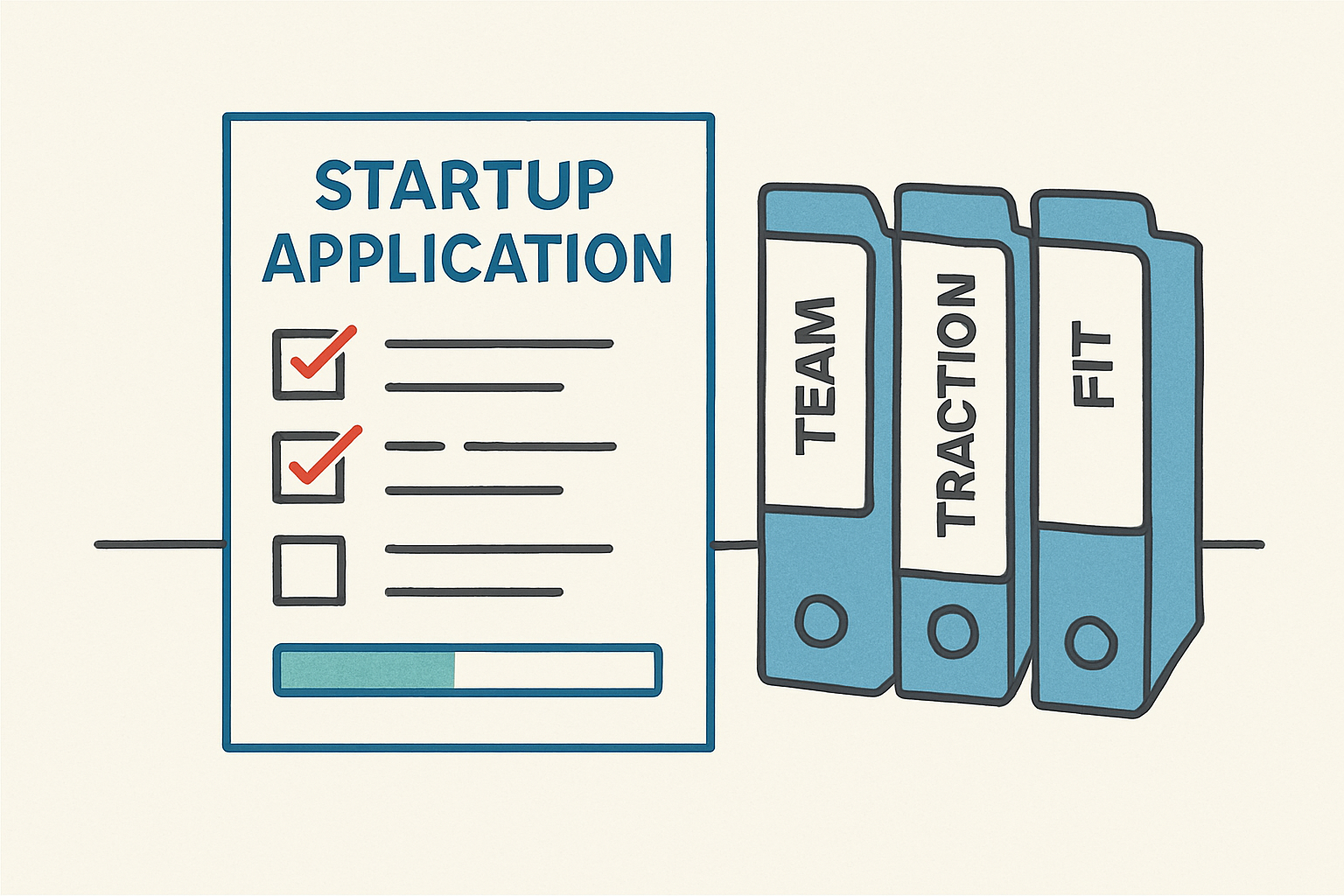
Getting accepted into a top Canadian accelerator is not about sounding impressive. In 2026, it is about demonstrating clarity under pressure. Programs like DMZ, Creative Destruction Lab, and Velocity are no longer looking for raw potential alone. They are selecting for founders who understand their own risks, can articulate progress precisely, and are ready to be pushed where it matters most.
This guide breaks down how strong founders approach accelerator applications, what programs actually evaluate, and how to position your company without overreaching or underselling.
Understand What Accelerators Are Really Screening For
Accelerators do not evaluate startups the way investors do, but they are not far off. In 2026, most top Canadian programs screen for three things at once: founder judgment, speed of learning, and alignment with the program’s core mandate. Applications fail when founders try to be everything at once instead of being specific.
Programs want to know whether you understand your biggest unknown and whether their environment is the right place to resolve it. Clarity beats ambition. Precision beats enthusiasm.
Match Your Stage to the Right Program
One of the most common reasons founders get rejected is simple misalignment. Accelerators are stage-specific, even when they do not advertise themselves that way. Applying too early signals confusion. Applying too late signals that you are looking for validation rather than leverage.
If you already have customers and need to professionalize go-to-market execution, programs focused on commercialization are a better fit. If your core risk is technical credibility or scientific validity, programs built around expert scrutiny will resonate more. If you are still forming the company, assembling the team, or validating the problem, incubation-style environments are often more appropriate.
Strong applications make this alignment explicit instead of hoping reviewers infer it.
What a Strong Application Actually Communicates
A strong application does not try to answer every question perfectly. It communicates coherence. Reviewers should be able to understand what you are building, who it is for, and what changed in the last three to six months without effort.
Founders who stand out explain decisions, not just outcomes. They show how they tested assumptions, what they learned, and how that learning shaped the product. Even modest traction is compelling when the reasoning behind it is sound.
Avoid generic language. Phrases like “huge market,” “AI-powered,” or “first-mover advantage” without concrete context weaken credibility rather than strengthen it.
The Team Section Matters More Than You Think
Canadian accelerators place significant weight on the founding team, especially at earlier stages. This is not about resumes alone. It is about founder-market fit and execution balance. Reviewers look for evidence that the team understands the problem space deeply and can move forward without constant external direction.
Strong teams articulate roles clearly, acknowledge gaps honestly, and demonstrate momentum. Weak teams over-index on credentials or hide uncertainty. Transparency signals maturity.
Traction Is Interpreted Contextually
There is no universal traction threshold for acceptance. What matters is whether your traction makes sense for your stage and sector. Early pilots, design partners, technical benchmarks, or signed letters of intent can all be meaningful if framed correctly.
What hurts applications is mismatched signaling. Claiming scale when you are still experimenting raises red flags. Understating progress because it “doesn’t feel big yet” leaves reviewers guessing. Your job is to make progress legible.
How to Approach the Interview or Follow-Up Stage
If the program includes interviews, treat them as working sessions, not pitches. Reviewers are testing how you think in real time. They want to see how you respond to pressure, ambiguity, and challenge.
The best founders listen carefully, answer directly, and adjust when feedback lands. Defensiveness, overconfidence, or rehearsed responses signal rigidity. Curiosity and clarity signal coachability.
Common Mistakes That Get Applications Rejected
Most rejections come down to a few patterns. Founders apply without a clear reason for choosing the program. They describe what they hope to build instead of what they have learned so far. Or they treat the application as a marketing exercise rather than an operational one.
Another frequent mistake is treating acceptance as validation rather than leverage. Programs are wary of founders who want the badge more than the outcome.
Final Perspective
Top Canadian accelerators are not looking for perfect companies. They are looking for founders who know where they are, where they are going next, and why structured pressure will help them get there faster.
If your application reflects that level of clarity, you dramatically increase your odds. Not because you look impressive, but because you look ready.
Disclaimer
This content is for general information only and does not constitute legal, financial, or investment advice. Program focus, evaluation criteria, and cohort structures may change; founders should confirm details directly with each accelerator before applying.
ShoutEx Insights
- Canadian Startup Ecosystem: Ultimate Guide 2026
- Complete Guide to Canadian Startup Accelerators and Incubators
- DMZ vs Creative Destruction Lab vs Velocity: Accelerator Comparison
- Best Accelerators by Province: Regional Guide
- How to Raise Seed Funding in Canada
- Product-Market Fit Startup Playbook
- What Makes a Good Pitch: A Guide for Founders
- 10 Slides Pitch Deck: Essential Structure
- Pitching to Investors: More Than Just Numbers
Further Readings:
- Hiring Trends in Canada
- DMZ at Toronto Metropolitan University: Application Process
- Creative Destruction Lab: How to Apply
- Velocity: University of Waterloo Programs
- Y Combinator: Application Tips (International Benchmark)
- Techstars: Accelerator Application Guide
- MaRS Discovery District: Startup Services
- BetaKit: Canadian Accelerator Application Deadlines
- Communitech: Program Information
Last updated by the Team at ShoutEx on January 19, 2026.
Frequently Asked Questions
What are Canadian accelerators really screening for in 2026?
Most top programs screen for founder judgment, speed of learning, and alignment with their mandate. They want to see that you understand your biggest risk, can explain recent progress clearly, and know why their specific environment is the right place to tackle that risk.
How do I know if my startup is at the right stage to apply?
If you already have customers and need to professionalize go‑to‑market, commercialization‑focused accelerators are a better fit. If your main risk is technical or scientific credibility, choose a program designed around expert scrutiny. If you are still forming the company or validating the problem, look for incubation‑style environments instead.
What does a strong accelerator application actually communicate?
A strong application communicates coherence: what you are building, for whom, and what has changed in the last three to six months. It explains how you tested key assumptions, what you learned, and how that learning drove product or go‑to‑market decisions, using concrete examples instead of generic buzzwords.
How important is the team section in Canadian accelerator applications?
The team section is critical. Reviewers look for founder‑market fit, complementary skills, and evidence that the team can execute without constant hand‑holding. Clear roles, honest acknowledgement of gaps, and signs of momentum matter more than stacked titles or name‑brand employers.
How should I present traction so it helps, not hurts?
Present traction in context: type of customer, cycle length, learning from each pilot or deal, and how it informs your next steps. Avoid exaggerating early data as “scale,” but also avoid downplaying meaningful signals like design partners, LOIs, or technical milestones that show real movement.
What is the right mindset for accelerator interviews?
Treat interviews as working sessions where the goal is to think through problems together, not perform a polished monologue. Listen carefully, answer directly, show how you reason under pressure, and be willing to adjust when feedback reveals a better path.
What common mistakes get Canadian founders rejected from accelerators?
Frequent mistakes include applying to the wrong stage of program, using generic language instead of specific examples, treating the accelerator as a badge rather than a tool, and failing to explain what concretely should change during the program. Applications that chase prestige instead of alignment are the fastest to be declined..